Showing posts with label Economics. Show all posts

Saturday, April 13, 2013

Иван Костов - Стопанският упадък и реформаторските идеи

Иван Костов on Twitpic


Иван Костов - Стопанският упадък и реформаторските идеи
 С.1993 | DOC 1,81 MB | PDF 1,47 MВ

Съдържание 

Предговор

Икономика, семиотика и бели джуджета
август 1988

За инфлацията: как и кой да я измери
14 август 1989

Никаква отсрочка
30 ноември 1989

Превъплъщенията на инфлацията
непубликувано, 1989

2 от 5
Непубликувано, 1989

Втората вълна на инфлацията
6 декември, 1989

Ръкуване с перестройката
22 януари 1990

Инфлация, криза и реформи
1990

Сабленият удар на пан Балцерович
1 февруари 1990

Компромиси срещу упадъка
21 март 1990 г.

Хороскоп за годините на реформата
9 април 1990

Краят на политикономиката
27 април 1990

Промяната, която носим в себе си
2 юни 1990

Каква опозиция ще имаме в парламента
24 юли 1990

В прицела на недоволството
21 август 1990

Как да наречем това?
21 септември 1990

Американско лекарство против социализма
9 октомври 1990

Властта изигра ролята си на "всеблаг баща господар"
6 ноември 1990

Препятствия пред пазарната икономика
18 октомври 1990

Българската икономика пред крах и реформи
непубликувано, 1990

Финансовата мотивация на фирмата
4 март, 1991

Реформата може да продължи независимо от политическите противоречия в страната (Доклад пред Великото народно събрание)
14 юни 1991

Опит за рекапитулация
4 октомври 1991

Дълг между системи
2 декември 1991

Вътрешни проблеми на външния дълг
11  януари 1992

Мотивацията и принудата на пазарната икономика
12 август 1992

Инстинктът за собственост
26 август 1992

Време за нова финансова политика
29 август 1992

Кризата, политиката и коалицията (непроизнесена реч)
в. "Демокрация", 21 септември 1992

Какво може да постигне българската икономика
5 октомври 1992

Тезиси по монетаризацията
3 март 1989

Политическите посоки и нашият избор
28 октомври 1992

По концепцията за данъчна реформа
Непубликувано, 1991

Външният дълг - големият залог
30 ноември - 8 декември 1992

Стопанският упадък и реформаторските идеи
1992

Акценти върху икономическото наследство от правителството на СДС
4-10, 15-16 февруари, 1993

Послеслов


Thursday, April 11, 2013

Paul Krugman - The Return of Depression Economics and the Crisis of 2008


Paul Krugman - The Return of Depression Economics and the Crisis of 2008

Publisher: W. W. Norton & Company;
Language: English
ISBN-10: 0393337804
ISBN-13: 978-0393337808
224 pages
Format: pdf
Size: 2.86 Мб

The New York Times bestseller: the Nobel Prize–winning economist shows how today’s crisis parallels the Great Depression—and explains how to avoid catastrophe. With a new foreword for this paperback edition.In this major bestseller, Paul Krugman warns that, like diseases that have become resistant to antibiotics, the economic maladies that caused the Great Depression have made a comeback. He lays bare the 2008 financial crisis—the greatest since the 1930s—tracing it to the failure of regulation to keep pace with an out-of-control financial system. He also tells us how to contain the crisis and turn around a world economy sliding into a deep recession. Brilliantly crafted in Krugman’s trademark style—lucid, lively, and supremely informed—this new edition of The Return of Depression Economics has become an instant classic. A hard-hitting new foreword takes the paperback edition right up to the present moment.

Download

Friday, November 2, 2012

Анатолий Чубайс - Экономика и управление в современной электроэнергетике России


Книгата определено е за специалисти енергетици, в нея няма милиграм от това, което приемаме за "научно-популярно". А е изключително подробна, професионално аргументирана и идеологически (в смисъл на енергетическа идеология) консисентна, тъй че ще е полезна за хората, интересуващи се професионално от българската енергийна система и започналата й либерализация. Тук трябва да напомня, че Чубайс извърши нещо, в което никой не вярваше - направи демонополизацията на държавния гигант монополист РАО "ЕЭС", както и започна либерализацията на енергийния сектор. Но няма смисъл лаик като мен да се опитва да прави представяне на книгата. Самото й съдържание говори достатъчно за разбиращите и интересуващите се, затова давам подробно съдържанието. А линкът за сваляне на книгата е накрая:


Оглавление

Введение (Предисловие)

Раздел I. Российская энергетика, ее роль в России и мире

Глава 1. Электроэнергетика – базовая отрасль российской экономики
1.1. Значение, особенности, технологическая структура и топливная база электроэнергетики
1.2. Российская электроэнергетика и ее место в мире
1.3. Основные этапы развития отечественной электроэнергетики
1.3.1. Становление и развитие отечественной электроэнергетики в период до 1990 года
1.3.2. Структурная перестройка электроэнергетики России в 1990-е годы
1.3.3. Реформирование электроэнергетики в 1998-2008 гг.
1.4. Техническая база российской электроэнергетики
    1.4.1. Генерация
    1.4.2. Электропередача
    1.4.3. Оперативно-диспетчерское управление
    1.4.4. Электромашиностроение и электротехника
1.5. Экология электроэнергетики
    1.5.1. Экологический аспект производства и передачи электроэнергии
1.5.2. Особенности экологических проблем ТЭС и ГЭС, пути их решения
1.5.3. Проблема эмиссии парниковых газов

Глава 2. Взаимодействие российской и мировой электроэнергетики
2.1. Либерализация электроэнергетики — мировой опыт
2.1.1. Эра вертикально-интегрированных энергетических компаний  и предпосылки изменения структуры электроэнергетики
2.1.2. Общие черты и суть либерализации электроэнергетики
2.1.3. Примеры рынков электроэнергии
2.1.4. Уроки либерализации и функционирования рынков электроэнергии
2.2. Синхронная зона ОЭС/ЕЭС — роль и стратегия развития на евроазиатском континенте
2.3. Торгово-экономическое сотрудничество российской электроэнергетики
2.3.1.  Экспорт и импорт  электроэнергии
2.3.2. Приобретение и эксплуатация энергетических активов   

Раздел II. Государственные и рыночные механизмы управления современной энергетикой и ее организационно-экономическая структура

Глава 3. Реформа электроэнергетики в России
3.1. Экономические предпосылки и технологические ограничения реформирования электроэнергетики
3.2. Организация реформирования электроэнергетики
3.2.1.  Реорганизация отрасли
3.2.2.  Переход к конкурентным рынкам
3.2.3. Структурные преобразования

Глава 4. Организационно — экономическая структура отрасли
4.1. Модель товарно-денежных потоков
4.1.1. Общая логика модели, экономический и финансовый анализ потоков
4.1.2. Операционная деятельность
4.1.3. Инвестиционная и финансовая  деятельность
4.1.4. Применение модели товарно-денежных потоков для оценки текущего состояния, прогнозов развития и инвестиционных проектов

4.2. Основные участники рынка электроэнергии
4.2.1. Поставщики
4.2.2. Единая национальная (общероссийская) энергетическая сеть
4.2.3. Распределительные сети
4.2.4. Системный оператор
4.2.5. Организации коммерческой инфраструктуры
4.2.6. Энергосбытовые организации в энергетике
4.2.7. АО-энерго – энергосистемы изолированных регионов

4.3. Организационно-экономическая структура энергетики Дальнего Востока
4.3.1. Особенности функционирования Объединенной энергосистемы (ОЭС) Востока
4.3.2. Цели и задачи реформирования энергосистем Дальнего Востока

Глава 5. Система государственного регулирования в электроэнергетике

5.1. Функции и органы государственного регулирования
5.2. Сфера и методы тарифного регулирования в современной электроэнергетике
5.2.1. Регулирование на основе экономически обоснованных затрат   
5.2.2. Стимулирующее регулирование
5.2.3. Система регулируемых тарифов в российской электроэнергетике
5.3. Недискриминационный доступ к услугам естественных монополий
5.4. Регулирование конкурентных видов деятельности в электроэнергетике
5.5.  Антимонопольное регулирование рынка электроэнергии
5.6.  Регулирование рынков топлива
5.7. Прогнозирование и проектирование развития электроэнергетики
5.7.1. Разработка перспектив развития электроэнергетики
5.7.2. Системное проектирование электроэнергетики

Глава 6. Система рынков в электроэнергетике
6.1. Состав и взаимосвязи рынков
6.2. Основы построения оптового и розничных рынков
6.2.1. Рынок электроэнергии на сутки вперед и двусторонние договоры купли-продажи электроэнергии
6.2.2. Балансирующий рынок
6.2.3. Рынок мощности
6.2.4. Рынок системных услуг
6.2.5. Финансовые права на передачу
6.2.6. Производные финансовые инструменты
6.2.7.  Розничный рынок электрической энергии

6.3.Особенности оптового рынка в российской электроэнергетике
6.3.1. Субъекты российского оптового рынка
6.3.2. Основные принципы функционирования переходного оптового рынка электроэнергии (мощности)
6.3.3. Особенности российского розничного рынка электроэнергии

6.4. Рынки сервисов
6.4.1. Сервисные виды деятельности
6.4.2. Организация конкурентного оказания сервисных услуг
6.5. Рынок тепловой энергии и его взаимосвязь с рынком электроэнергии

Глава 7. Управление надежностью в электроэнергетике
7.1. Надежность объектов электроэнергетики и энергосистем
7.2. Обеспечение надежности
7.2.1.  Механизмы управления надежностью
7.2.2. Технологические и организационно-экономические возможности регулирования уровня надежности
7.2.3. Рынок системных услуг и основные направления повышения надежности

Раздел III. Управление и экономика предприятий электроэнергетики

Глава 8. Основы современного менеджмента и построения организационных структур
8.1. Развитие науки управления и современный менеджмент
8.2. Уровни и методы управления
8.3. Основные  функции менеджмента
8.4. Организационные структуры и их проектирование
8.4. Организационно-структурные преобразования в РАО «ЕЭС России»   

Глава 9. Корпоративное управление на энергетических предприятиях
9.1. Органы и процедуры управления энергокомпанией
9.1.1. Общие положения
9.1.2. Структура органов управления и контроля, модель управления
9.1.3. Процедуры управления

9.2. Организация взаимодействия менеджмента с акционерами и инвесторами
9.2.1. Статус акционера и порядок учета его прав
9.2.2. Права и  классификация акционеров в зависимости от их прав
9.2.3. Инвесторы
9.2.4. Система взаимодействия с инвесторами (акционерами)

9.3. Оценка бизнеса энергопредприятия и его рыночная капитализация
9.3.1. Стоимость предприятия. Факторы, влияющие на стоимость предприятия электроэнергетики
9.3.2. Методы оценки стоимости предприятий электроэнергетики
9.3.3. Порядок распоряжения активами

9.4. Реорганизация на энергопредприятиях: разделение, выделение, слияние и поглощение
9.4.1. Разделение и выделение как способы реорганизации
9.4.2. Порядок реорганизации в форме выделения (разделения)
9.4.3. Укрепление разделившихся компаний. Формирование холдингов, присоединение (слияние)

Глава 10. Планирование, бюджетирование и оценка финансовых результатов предприятия электроэнергетики
10.1. Стратегическое планирование
10.1.1. Введение в стратегическое планирование
10.1.2.  Примеры стратегий энергетических предприятий

10.2. Бизнес-план и планирование
10.2.1. Общие принципы бизнес-планирования. Система планов
10.2.2. Организация бизнес-планирования в ОАО РАО «ЕЭС России»
10.2.3. Структура бизнес-плана
10.2.4. Особенности бизнес-планирования в электроэнергетических компаниях разного профиля деятельности
10.2.5. Порядок разработки бизнес-плана
10.2.6. Консолидированный бизнес-план межрегиональных компаний

10.3. Бюджет движения потоков наличности в системе бюджетирования электроэнергетических компаний
10.3.1. Бюджетирование
10.3.2. Современная организация бюджетирования
10.3.3.  Казначейское исполнение бюджета

10.4. Учетная и налоговая политика электроэнергетических компаний
10.4.1. Особенности учетной и налоговой политики электроэнергетической  компании
10.4.2. Организация бухгалтерского и налогового учета в компаниях электроэнергетики
10.4.3.  Аудиторское заключение по финансовой отчетности
10.4.4. Управленческий учет
10.4.5. Переход от российских стандартов бухгалтерского учета к международным стандартам бухгалтерской отчетности

10.5. Оценка финансовых результатов
10.5.1. Прибыль как основной финансовый результат работы электроэнергетической компании
10.5.2. Особенности расчета прибыли в российской системе бухгалтерского учета и в международной системе финансовой отчетности
10.5.4. Экспресс-анализ финансовых результатов
10.5.5. Основные направления распределения и использования чистой прибыли

Глава 11. Важнейшие функциональные подсистемы в электроэнергетических компаниях
11.1. Управление персоналом
11.1.1. Структура кадров, методы оценки и отбора, подготовки и переподготовки
11.1.2. Мотивация и стимулирование персонала
11.1.3. Нематериальное стимулирование персонала
11.1.4. Социальное партнерство

11.2. Управление издержками
11.2.1. Издержки на энергопредприятиях
11.2.2.  Программа управления издержками: структура, порядок разработки, утверждения и контроля

11.3. Управление закупками
11.3.1. Оптимизация закупочной деятельности
11.3.2. Организация закупочной деятельности в элетроэнергетике

11.4. Управление инвестиционным процессом
11.4.1. Инвестиционные проекты и оценка их эффективности
11.4.2. Проектное финансирование
11.4.3.  Формирование инвестиционной программы и портфеля заказов. Управление проектами

11.5. Управление ремонтными услугами
11.5.1. Система комплексного ремонтного обслуживания
11.5.2. Основные  подходы к организации технического обслуживания и ремонта оборудования, зданий и сооружений тепловых электростанций
11.5.3. Планирование ремонта оборудования

11.6. Управление инновациями
11.6.1. Интеллектуальная деятельность, ее учет и оценка
11.6.2. Организация структуры в инновационной сфере
11.6.3. Формирование рынка инноваций и интеллектуальных ресурсов на основе IT-технологий

11.7. Техническое регулирование в электроэнергетике и управление качеством
11.7.1. Закон «О техническом регулировании» и его применение в электроэнергетике
11.7.2. Практика стандартизации в электроэнергетике
11.7.3. Системы менеджмента  качества согласно ИСО 9000

11.8. Управление воздействием энергопредприятий на окружающую среду
11.8.1. Электроэнергетика и окружающая среда
11.8.2. Экологическая работа в энергокомпаниях
11.8.3. Формы и методы участия энергопредприятий в механизмах Киотского протокола

11.9. Оперативное управление
11.9.1. Функции, структура и особенности оперативного управления
11.9.2. Задачи оперативного управления
11.9.3. Оперативное управление рисками (риск-менеджмент) и антикризисное управление
11.9.4. Общие требования к инженерному менеджменту в области оперативного управления производственной деятельностью
11.9.5. Контроль и анализ в оперативном управлении
11.9.6. Оперативное управление технологическими процессами предприятий электроэнергетики
11.9.7. Оперативное управление финансами
11.9.8. Оптимизация режимов работы электроэнергетического оборудования

Глава 12. Основные подсистемы предприятий электроэнергетики, обеспечивающие их жизнедеятельность
12.1. Юридическо-правовая защита
12.1.1. Организация правового обеспечения
12.1.2. Направления и оценка качества правового обеспечения
12.1.3. Опыт РАО «ЕЭС России»

12.2. Связи электроэнергетических компаний с общественностью и органами государственной власти –  PR и GR
12.2.1. Связь с общественностью
12.2.2. Особенности PR-деятельности электроэнергетических компаний различных видов деятельности
12.2.3. Взаимодействие электроэнергетических компаний с органами государственной власти
12.2.4. Организация, формы и методы GR-работы

12.3. Информационные технологии
12.3.1. ИТ-служба в системе управления электроэнергетической компании
12.3.2. Информационные системы электроэнергетики

Глава 13. Развитие энергетики в условиях рынка
13.1. Концепция инвестиционного развития электроэнергетики
13.2. Реализация перехода в фазу развития в 2006-2008 гг.
13.3. Институционные условия эффективного развития электроэнергетики в условиях рынка

Глава 14. Долгосрочное планирование и проектирование  развития электроэнергетики

14.1. Целевое видение развития ЕЭС России на период до 2030 года
14.2. Генеральная схема размещения объектов электроэнергетики до 2020 г.
14.3. Прогнозный баланс электроэнергетики на 2008-2015 годы


Рекомендуемая литература
К разделу I
К разделу II
К разделу III
К разделу IV

Федеральные законы РФ
Постановления Правительства РФ
Приказы Министерств РФ
Методические указания


Размер 13.57 Мб Формат Word 93 (doc) страници 1074


Sunday, April 15, 2012

Електроенергетиката на България. Развитие и обществена цена


"Електроенергетиката на България. Развитие и обществена цена"


БАН, 2009; страници 192; формат pdf; размер 4,54 MB 

Книгата съдържа единствената засега количествена оценка за развитието на електроенергетиката на България до 2030 г. Сред авторите са трима признати специалисти, които познавам и много уважавам - ст.н.с. дтн Пламен Цветанов, инж. Георги Стоилов и ст.н.с. инж. Георги Босев. Те предлагат енергийна политика на здравия разум, която може да насочи електроенергетиката към конкурентна икономика и благополучие на крайния потребител в противовес на провежданата досега политика на екстензивно развитие. Предложеният сценарий ще акумулира спестявания на около 14,4 милиарда евро още към 2020 г от рационализирането на енергийната политика в България. Тези средства могат да бъдат използвани за възраждането на страната, ускореното внедряване на ВЕИ и енергийна ефективност съгласно енергийната стратегия на ЕС, както и за решаването на многобройните социално-икономически проблеми.


Monday, October 18, 2010

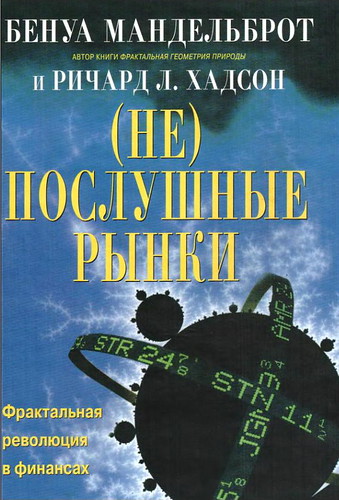
Бенуа Мандельброт, Ричард Л. Хадсон - (Не)послушные рынки. Фрактальная революция в финансах

mandelbrot


Бенуа Мандельброт, Ричард Л. Хадсон - (Не)послушные рынки. Фрактальная революция в финансах

Вильямс | 2006 | ISBN 5-8459-0922-8, 0-1300-9717-9| 390 pages | DJVU | 9.74 MB | Язык: русский

В своей очередной книге "(Не)послушные рынки" плодотворный автор знаменитой "Фрактальной геометрии природы" (1982 год) Бенуа Мандельброт вновь подрывает устои. На сей раз - современной финансовой теории - той самой, которую преподают в самых престижных школах бизнеса мира, и на которой построена глобальная финансовая система. Это совершенно новый, революционный взгляд на финансы, способный перевернуть наши представления о них с ног на голову.

В книге показано, как применимы авторские концепции самоповторения в масштабе, долгосрочной зависимости, бурной случайности, мультифрактального анализа и многие другие к миру бизнеса. Очевидно, "Непослушные рынки" просто обязаны прочесть все, кто причастен к финансам, бизнесу, производству. Но не только: любой человек, интересующийся тем, как устроен наш мир, насколько он упорядочен или хаотичен, надежен или опасен, после прочтения книги посмотрит вокруг себя другими глазами.
"Непослушные рынки" - книга научно-популярная, совершенно не перегруженная математическими выкладками. О глобальных, мировоззренческих вещах рассказано чрезвычайно увлекательно, простым, доступным, с изрядной долей юмора языком.

Thursday, December 17, 2009

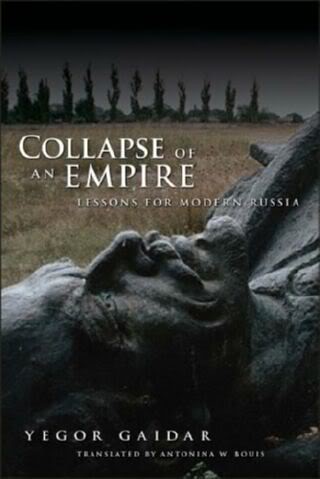
Егор Гайдар - Гибель империи. Уроков для современной России (англ. и рус. ез.)


Yegor Gaidar - Collapse of an Empire: Lessons for Modern Russia
Brookings Institution Press | 2007) | ISBN: 0815731140 | PDF | 332 pages | 1,3 MB

"Yegor Gaidar has written an outstanding book of great importance. With extraordinary erudition, he warns Russia against following the course of Nazi Germany, focusing on the double trap of post-imperial hangover and the oil curse. Professor Gaidar also shows how profound and manifold the Soviet collapse of 1991 really was." --Anders Ãslund, Senior Fellow, Peterson Institute for International Economics

"Yegor Gaidar will be known to history as the architect of Russia's transition to a market economy. But here he shows his other side, as a brilliant economist and historian presenting a compelling explanation of the Soviet Union's collapse: its financial bankruptcy." --Andrei Schleifer, Harvard University and author of A Normal Country: Russia after Communism

"Yegor Gaidar, a hero of Russian reform, has provided a courageous and clear-headed wakeup call for his own people and the world. He argues persuasively that today s Kremlin leaders are heading down the same economic path that led their Communist predecessors to disaster. Combining personal experience, deep analysis and a rare grasp of facts--including from previously classified documents--Gaidar has produced a book of insight and importance. It is must-reading for anyone trying to comprehend what really happened to the Soviet Union, why its system was inherently instable, and why nostalgia for the days of empire fashionable at the highest levels in Russia today--is wrongheaded and dangerous." --George Soros

In today's Russia, nostalgia for the Soviet era is growing. Many Russians reflect wistfully on the passing of an era when the Soviet Union was a superpower, commanding international respect, and they blame its demise on external enemies and foolish changes in policy. In an address to the Russian Federal Assembly, President Vladimir Putin called the breakup of the Soviet Union the greatest geopolitical catastrophe of the 20th century. In Collapse of an Empire: Lessons for Modern Russia, however, economic reformer and former prime minister Yegor Gaidar clearly illustrates why such notions are misguided, ill informed, and dangerous. As he explains in the introduction: "My goal is to show the reader that the Soviet political and economic system was unstable by its very nature. It was just a question of when and how it would collapse."

Although the Soviet Union never referred to itself as an empire, it fit Gaidar's definition: "a powerful multiethnic state formation in which the power (or at least the right to vote) is concentrated in the metropolis and its democratic institutions (if they exist), though the power and those institutions do not extend to the entire territory under its control." The U.S.S.R. sat on a shaky foundation of far-flung lands, conquered peoples, centralized authoritarian government, and a command economy overly reliant on natural resources. Gaidar explains why this once-powerful state was doomed to fail eventually, and why Russians should be looking forward rather than backward in building their nation. He worries that Russia is repeating some of its tragic mistakes, including uneven economic development that leaves the nation vulnerable to fluctuations in the energy market.

Gaidar uses the Soviet case as a device for understanding the life cycle of empires, which found themselves at the wrong end of history in the twentieth century. World War I spelled the end for the Hapsburgs, Ottomans, and Romanoffs, for example, and Europe's overseas empires began breaking apart after World War II. In the 1990s, the final remaining territorially integrated empire-the Soviet Union-fell. This is no mere coincidence: "The dissolution of empires in the twentieth century is a component of the process of global change that is called modern economic growth." To reproduce such a flawed model of governance would be a tragic mistake, yet many Russians still look backward through rose-colored glasses as their government centralizes power again. Such misplaced nostalgia defies reality while it imperils the future of Russia and its people.


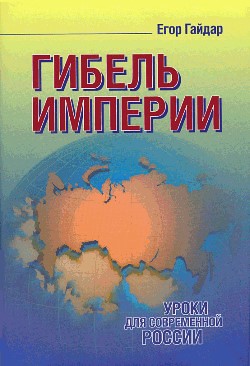
И за предпочитащите руския език:
Егор Гайдар - Гибель империиЕгор Гайдар - Гибель империи: Уроки для современной России
(РОССПЭН); М. | 2006 | ISBN 5 – 8243 – 0759 – 8 | DOC | 247 стр | 2,43 MB

Thursday, June 25, 2009

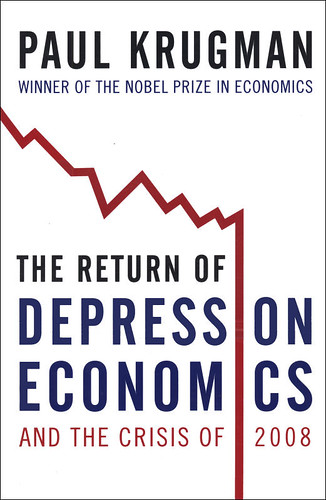
Paul Krugman - The Return of Depression Economics and the Crisis of 2008


Paul Krugman - The Return of Depression Economics and the Crisis of 2008 (2nd Edition)
W. W. Norton & Company | 2nd Edition | 2009 | ISBN: 0393071014 | 201 pages | siPDF | 2.7 MB

In 1999, in The Return of Depression Economics, Paul Krugman surveyed the economic crises that had swept across Asia and Latin America, and pointed out that those crises were a warning for all of us: like diseases that have become resistant to antibiotics, the economic maladies that caused the Great Depression were making a comeback. In the years that followed, as Wall Street boomed and financial wheeler-dealers made vast profits, the international crises of the 1990s faded from memory. But now depression economics has come to America: when the great housing bubble of the mid-2000s burst, the U.S. financial system proved as vulnerable as those of developing countries caught up in earlier crises and a replay of the 1930s seems all too possible.

In this new, greatly updated edition of The Return of Depression Economics, Krugman shows how the failure of regulation to keep pace with an increasingly out-of-control financial system set the United States, and the world as a whole, up for the greatest financial crisis since the 1930s. He also lays out the steps that must be taken to contain the crisis, and turn around a world economy sliding into a deep recession. Brilliantly crafted in Krugman's trademark style—lucid, lively, and supremely informed—this new edition of The Return of Depression Economics will become an instant cornerstone of the debate over how to respond to the crisis.

Contents

Introduction
About This Book

1. "The Central Problem Has Been Solved"
Capitalism Triumphant
The Taming of the Business Cycle
Technology as Savior
The Fruits of Globalization
Skeptics and Critics

2. Warning Ignored: Latin America's Crises
Mexico: Up from the 1980s
Argentina's Break with the Past
Mexico's Bad Year
The Tequila Crisis
The Great Rescue
Learning the Wrong Lessons

3. Japan's Trap
Japan as Number One
Bubble, Toil and Trouble
A Stealthy Depression
Japan's Trap
Japan Adrift
Japan's Recovery

4. Asia's Crash
The Boom
July 2, 1997
Meltdown
Contagion
Why Asia? Why 1997?
Epilogue: Argentina, 2002
The Deeper Question

5. Policy Perversity
How the International Monetary System Didn't Evolve
The Speculative Threat
The Confidence Game
Did the IMF Make the Situation Worse?

6. Masters Of The Universe
The Nature of the Beast
The Legend of George Soros
The Madness of Prime Minister Mahathir
The Attack on Hong Kong
The Potemkin Economy
The Panic of 1998

7. Greenspan's Bubbles
The Age of Greenspan
America's Designated Driver
Greenspan's Bubbles
When Bubbles Burst

8. Banking In The Shadows
The History of Banking, Simplified
The Shadow Banking System
Malign Neglect

9. The Sum Of All Fears
The Housing Bust and Its Fallout
The Non-Bank Banking Crisis
The Fed Loses Traction
The Mother of All Currency Crises
A Global Slump

10. The Return Of Depression Economics
What Is Depression Economics?
What to Do: Dealing with the Emergency
Financial Reform
The Power of Ideas


----------------
Now playing: Judas Priest - [Metal Works 1973 - 1993 CD 1 #00] Breaking The Law [foobar2000 v0.9.6.8]
via FoxyTunes

Thursday, June 18, 2009

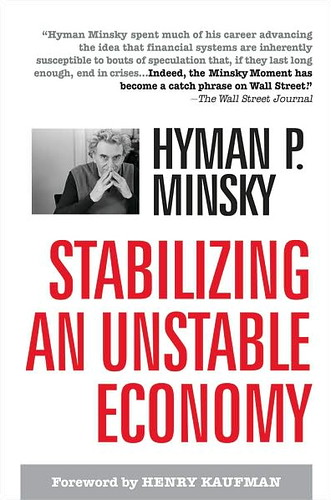
Stabilizing an Unstable Economy


Hyman Minsky - Stabilizing an Unstable Economy
McGraw-Hill | English | 2008-04-14 | ISBN: 0071592997 | 350 pages | PDF | 5,8 MB

“Mr. Minsky long argued markets were crisis prone. His 'moment' has arrived.” -The Wall Street Journal

In his seminal work, Minsky presents his groundbreaking financial theory of investment, one that is startlingly relevant today. He explains why the American economy has experienced periods of debilitating inflation, rising unemployment, and marked slowdowns-and why the economy is now undergoing a credit crisis that he foresaw. Stabilizing an Unstable Economy covers:

• The natural inclination of complex, capitalist economies toward instability

• Booms and busts as unavoidable results of high-risk lending practices

• “Speculative finance” and its effect on investment and asset prices

• Government's role in bolstering consumption during times of high unemployment

• The need to increase Federal Reserve oversight of banks

Henry Kaufman, president, Henry Kaufman & Company, Inc., places Minsky's prescient ideas in the context of today's financial markets and institutions in a fascinating new preface. Two of Minsky's colleagues, Dimitri B. Papadimitriou, Ph.D. and president, The Levy Economics Institute of Bard College, and L. Randall Wray, Ph.D. and a senior scholar at the Institute, also weigh in on Minsky's present relevance in today's economic scene in a new introduction.

A surge of interest in and respect for Hyman Minsky's ideas pervades Wall Street, as top economic thinkers and financial writers have started using the phrase “Minsky moment” to describe America's turbulent economy. There has never been a more appropriate time to read this classic of economic theory.


----------------
Now playing: Zdravko Colic - Pusti, Pusti Modu [foobar2000 v0.9.6.8]
via FoxyTunes

Saturday, June 6, 2009

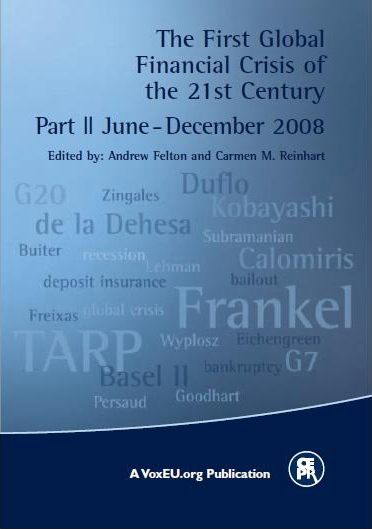
The First Global Financial Crisis of the 21st Century 2 vol.


CEPR - The First Global Financial Crisis of the 21st Century
Publisher: CEPR | ISBN: 978-0-9557009-3-4 | edition June 2008 | PDF | 204 pages | 1,12 mb

CEPR - The First Global Financial Crisis of the 21st Century. Vol.2 June – December, 2008
Publisher: CEPR | ISBN: 978-0-9557009-9-6 | edition January 2009 | PDF | 390 pages | 2,16 mb

The Centre for Economic Policy Research (CEPR), a registered charity founded in 1983 by Richard Portes, FBA, CBE, is a network of over 700 researchers based mainly in universities throughout Europe, who collaborate through the centre in research and its dissemination. CEPR's office is located in London but CEPR is a Think-Net drawing on academic research across Europe.

The Centre's mission is to promote research excellence and policy relevance in European economics. CEPR network of over 700 Research Fellows and Affiliates are based in over 237 different institutions in 28 countries (90% in the European Union. Because it draws on such a large network of researchers, CEPR is able to produce a wide range of research that reflects a broad spectrum of individual viewpoints and perspectives.


Vol.1 Contents

Preface
Introduction

Section 1 Why Did the Crisis Happen?

The relationship between the recent boom and the current delinquencies in subprime mortgages
Giovanni Dell'Ariccia, Deniz Igan and Luc Laeven

Why bank risk models failed
Avinash Persaud

Blame the models
Jon Danielsson

The subprime crisis: observations on the emerging debate
Charles Wyplosz

The subprime series, part 1: Financial crises are not going away
Stephen G. Cecchetti

The subprime series, part 2: Deposit insurance and the lender of last resort
Stephen G. Cecchetti

The subprime series, part 3: Why central banks should be financial supervisors
Stephen G. Cecchetti

The subprime series, part 4: Does well-designed monetary policy encourage risk- taking?
Stephen G. Cecchetti

The subprime crisis: Greenspan’s Legacy
Tito Boeri and Luigi Guiso

The impact of short-term interest rates on risk-taking: hard evidence
Vasso Ioannidou, Steven Ongena and Jose Luis Peydró

Why did bank supervision fail?
Guido Tabellini

The subprime crisis and credit risk transfer: something amiss
Luigi Spaventa

The crisis of 2007: some lessons from history
Michael D. Bordo

Reflections on the international dimensions and policy lessons of the US subprime crisis
Carmen Reinhart

Section 2 How Is the Crisis Unfolding?

Federal Reserve policy actions in August 2007: frequently asked questions (updated)
Stephen G. Cecchetti

An extensive but benign crisis?
Tommaso Monacelli

Not (yet) a ‘Minsky moment’
Charles W. Calomiris

A B & B future for subprime borrowers?
Willem Buiter

Double counting 101: the useful distinction between inside and outside assets
Willem Buiter

Bagehot, central banking and the financial crisis
Xavier Vives

The financial crisis: why it may last
Angel Ubide

Fallout from the credit crunch
Dennis J. Snower

Four mega-dangers international financial markets face
Dennis J. Snower

Federal Reserve policy responses to the crisis of 2007–8: a summary
Stephen G. Cecchetti

While the ECB ponders, the Fed moves – and cleverly at that
Charles Wyplosz

Section 3 What Can Be Done?

The subprime crisis: Who pays and what needs fixing
Marco Onado

Filling the information gap
Alberto Giovannini and Luigi Spaventa

Lessons from the North Atlantic financial crisis
Willem Buiter

Lessons from Northern Rock: banking and shadow banking
Willem Buiter

Lessons from Northern Rock: how to handle failure
Willem Buiter

Ratings agency reform
Richard Portes

How to avoid further credit and liquidity confidence crises
Guillermo de la Dehesa

The inappropriateness of financial regulation
Avinash Persaud

There is more to central banking than inflation targeting
Paul De Grauwe

Can monetary policy really be used to stabilize asset prices?
Katrin Assenmacher-Wesche and Stefan Gerlach

A missed opportunity for the Fed
Willem Buiter and Anne Sibert

The central bank as the market-maker of last resort: from lender of last resort to market-maker of last resort
Willem Buiter and Anne Sibert

Avoiding disorderly deleveraging
Luigi Spaventa

Chronology
Glossary


Vol.2 Contents

Preface
Introduction

Section 1: The spread of the crisis to the rest of the world

The first casualty of the crisis: Iceland
Jon Danielsson

Iceland: The future is in the EU
Philip Lane

Iceland faces the music
Gylfi Zoega

The collapse of Iceland’s banks: the predictable end of a non-viable business model
Willem Buiter and Anne Sibert:

The fallout from the global credit crisis: Contagion - emerging markets under stress
Helmut Reisen

From capital flow bonanza to financial crash
Carmen Reinhart and Vincent Reinhart

Rapid and large liquidity funding for emerging markets
Guilermo Calvo and Ruby Loo-Kung

Stock market wealth effects in emerging market countries
Heiko Hesse

The political economy of debt relief
Andreas Freytag and Gernot Pehnelt

India’s credit crunch conundrum
Arvind Subramanian

Preserving financial sector confidence, not monetary easing, is key
Arvind Subramanian

The folly of the central banks of Europe
Jonh Muellbauer

Crisis management tools for the euro-area
Daniel Gros and Stefano Micossi

A proposal on financial regulation in Europe for the next European Council
Carmine Di Noia

The European response to the crisis: Not quite there yet
Marco Pagano

Finance, market, globalisation: a plot against mankind?
Salvatore Rossi

Can Europe take care of its own financial crisis?
Daniel Gros

The financial crisis may hasten European integration but slow global banking
Avinash Persaud

A call for a European Financial Stability Fund
Daniel Gros and Stefano Micossi

Governance of banks
Luc Laeven and Ross Levine

Finance, redistribution, globalisation
Giuseppe Bertola and Anna Lo Prete

What Next for the Dollar? The Role of Foreigners
Kristin Forbes

Is the US too big to fail?
Carmen Reinhart and Vincent Reinhart

Can the IMF save the world?
Barry Eichengreen

Section 2: What is wrong with the traditional economic/financial viewpoint and models?

The financial meltdown is an academic crisis too
Richard Dale

European securitisation and the possible revival of financial innovation
John Kiff, Paul Mills, and Carolyne Spackman

The price of transparency
Marco Pagano

The Panglossian World of Finance
Daniel Cohen

What can be learned from the banking crisis
Hans-Werner Sinn

Do reputational concerns lead to reliable ratings?
Beatriz Mariano

The Financial Economists Roundtable’s statement on reforming the role of SROs in the securitisation process
Charles Goodhart

Liquidity risk and the current crisis
Lasse Heje Pedersen

How risk sensitivity led to the greatest financial crisis of modern times
Avinash Persaud

Transmission of liquidity shocks: Evidence from the 2007 subprime crisis
Nathaniel Frank, Brenda González-Hermosillo, and Heiko Hesse

The lender of last resort of the 21st century
Xavier Freixas and Bruno Parigi

Reason with the messenger; don’t shoot him: value accounting, risk management and financial system resilience
Avinash Persaud

Escaping from a Combined Liquidity Trap and Credit Crunch
Frank Heinemann

Complexity kills
Jon Danielsson

Will the credit crunch lead to recession?
Nicholas Bloom

The credit crunch may cause another great depression
Nicholas Bloom

The procyclical effects of Basel II
Rafael Repullo and Javier Suarez

Central banks’ function to maintain financial stability: An uncompleted task
Charles Goodhart

Let banks be banks, let investors be investors
Alberto Giovannini

Stormy Weather in the Credit Default Swap Market
Virginie Coutert and Mathieu Gex

Why does the spread between LIBOR and expected future policy rates persist, and should central banks do something about it?
Francesco Giavazzi

Section 3: The proper governmental response

Anatomy of the financial crisis
Barry Eichengreen

The subprime turmoil: What’s old, what’s new, and what’s next
Charles Calomiris

An international perspective on the US bailout
Romain Rancière

Not the end of capitalism
Erik Berglöf and Howard Rosenthal

The effectiveness of fiscal policy depends on the financing and monetary policy mix
Giancarlo Corsetti and Gernot Müller

Fiscal policy and the credit crunch: What will work?
Daniel Gros

Episode V: Expectations strike back
Micael Castanheira

Germany needs high wage settlements and a serious fiscal stimulus
Andrea Boltho and Wendy Carlin

Plan B
Luigi Zingales

Why Paulson is (maybe) right
Charles Wyplosz

A (mild) defence of TARP
Luigi Spaventa

The right alternative to Paulson's plan
Avinash Persaud

The Paulson Plan: A useful first step but nowhere near enough
Willem Buiter

From recapitalisation to restructuring and reforms
Viral Acharya

Why Paulson is wrong
Luigi Zingales

A matched preferred stock plan for government assistance
Charles Calomiris

An emerging consensus against the Paulson Plan: Government should force bank capital up, not just socialise the bad loans
Jeffrey Frankel

Banks’ losses and capital: The new version of the paradox of Achilles and the tortoise
Marco Onado

TARP2: A totally alternative relief programme
Ricardo Cesari

Involving European citizens in the benefits of the rescue plan: The political paradoxes of bank socialism
Tito Boeri

What is a reverse auction?
Marco Pagano

‘No recourse’ and ‘put options’: Estimating the ‘fair value’ of US mortgage assets
Daniel Gros

Bringing money markets back to life
Javier Suarez

The other part of the bailout: Pricing and evaluating the US and UK loan guarantees
Viral Acharya and Raghu Sundaram

The beginning of the end game…
Daniel Gros and Stefano Micossi

Financial crisis resolution: It’s all about burden-sharing
Charles Wyplosz

Is the euro area facing a credit crunch or a credit squeeze?
Guillermo de la Dehesa

Global financial crisis: How long? How deep?
Stijn Claessens, M Ayhan Kose and Marco Terrones

The cost of resolving financial crises
Luc Laeven

Financial crisis management: Lessons from Japan’s failure
Keiichiro Kobayashi

And now the Great Depression
Barry Eichengreen

Financial markets and a lender of last resort
Eric Hughson and Marc Weidenmier

Too many bankers?
Esther Duflo

Chronology
Glossary

Download
Vol.1
Vol.2


Friday, May 29, 2009

Narcis Serra, Joseph E. Stiglitz (Editors)- The Washington Consensus Reconsidered: Towards a New Global Governance


Narcis Serra, Joseph E. Stiglitz (Editors) - The Washington Consensus Reconsidered: Towards a New Global Governance
Publisher: Oxford University Press 2008 | ISBN: 0199534098 | PDF | 384 pages | 1,88 mb

This volume brings together many of the leading international figures in development studies, such as 2008 Nobel Prize in Economics winner Paul Krugman, Jose Antonio Ocampo, Dani Rodrik, Joseph Stiglitz, Daniel Cohen, Olivier Blanchard, Deepak Nayyer and John Williamson to reconsider and propose alternative development policies to the Washington Consensus. Covering a wide range of issues from macro-stabilization to trade and the future of global governance, this important volume makes a real contribution to this important and ongoing debate.
The volume begins by introducing the Washington Consensus, discussing how it was originally formulated, what it left out, and how it was later interpreted, and sets the stage for a formulation of a new development framework in the post-Washington Consensus era. It then goes on to analyze and offer differing perspectives and potential solutions to a number of key development issues, some which were addressed by the Washington Consensus and others which were not. The volume concludes by looking toward formulating new policy frameworks and offers possible reforms to the current system of global governance.


Part I The Washington Consensus: From Its Origins to Its Critics

1. Introduction: From the Washington Consensus Towards a New Global Governance
Narcís Serra, Shari Spiegel, and Joseph E. Stiglitz

2. A Short History of the Washington Consensus
John Williamson

3. Inequality and Redistribution
Paul Krugman

4. Is there a Post-Washington Consensus Consensus?
Joseph E. Stiglitz

5. The Barcelona Development Agenda

Part II Analyses of Central Issues in Development

6. A Broad View of Macroeconomic Stability
José Antonio Ocampo

7. The Wild Ones: Industrial Policies in the Developing World
Alice H. Amsden

8. Sudden Stop, Financial Factors, and Economic Collapse in Latin America: Learning from Argentina and Chile
Guillermo A. Calvo and Ernesto Talvi

9. Towards a New Modus Operandi of the International Financial System
Daniel Cohen

10. The World Trading System and Implications of External Opening
Jeffrey A. Frankel

11. The World Trading System and Development Concerns
Martin Khor

12. Reforming Labor Market Institutions: Unemployment Insurance and Employment Protection
Olivier Blanchard

13. International Migration and Economic Development
Deepak Nayyar

Part III Towards a New Global Governance

14. The Future of Global Governance
Joseph E. Stiglitz

15. Growth Diagnostics
Ricardo Hausmann, Dani Rodrik, and Andrés Velasco

16. A Practical Approach to Formulating Growth Strategies
Dani Rodrik


Wednesday, May 27, 2009

Nassim Nicholas Taleb - The Black Swan: The Impact of the Highly Improbable


Nassim Nicholas Taleb - The Black Swan: The Impact of the Highly Improbable
Publisher: Random House 2007 | 366 Pages | ISBN: 1400063515 | PDF | 7 MB

Four hundred years ago, Francis Bacon warned that our minds are wired to deceive us. "Beware the fallacies into which undisciplined thinkers most easily fall--they are the real distorting prisms of human nature." Chief among them: "Assuming more order than exists in chaotic nature." Now consider the typical stock market report: "Today investors bid shares down out of concern over Iranian oil production." Sigh. We're still doing it.

Our brains are wired for narrative, not statistical uncertainty. And so we tell ourselves simple stories to explain complex thing we don't--and, most importantly, can't--know. The truth is that we have no idea why stock markets go up or down on any given day, and whatever reason we give is sure to be grossly simplified, if not flat out wrong.

Nassim Nicholas Taleb first made this argument in Fooled by Randomness, an engaging look at the history and reasons for our predilection for self-deception when it comes to statistics. Now, in The Black Swan: the Impact of the Highly Improbable, he focuses on that most dismal of sciences, predicting the future. Forecasting is not just at the heart of Wall Street, but it’s something each of us does every time we make an insurance payment or strap on a seat belt.

The problem, Nassim explains, is that we place too much weight on the odds that past events will repeat (diligently trying to follow the path of the "millionaire next door," when unrepeatable chance is a better explanation). Instead, the really important events are rare and unpredictable. He calls them Black Swans, which is a reference to a 17th century philosophical thought experiment. In Europe all anyone had ever seen were white swans; indeed, "all swans are white" had long been used as the standard example of a scientific truth. So what was the chance of seeing a black one? Impossible to calculate, or at least they were until 1697, when explorers found Cygnus atratus in Australia.

Nassim argues that most of the really big events in our world are rare and unpredictable, and thus trying to extract generalizable stories to explain them may be emotionally satisfying, but it's practically useless. September 11th is one such example, and stock market crashes are another. Or, as he puts it, "History does not crawl, it jumps." Our assumptions grow out of the bell-curve predictability of what he calls "Mediocristan," while our world is really shaped by the wild powerlaw swings of "Extremistan."


Sunday, May 24, 2009

Predictably Irrational: The Hidden Forces That Shape Our Decisions


Dan Ariely - "Predictably Irrational: The Hidden Forces That Shape Our Decisions"
304 pages | HarperCollins 2008 | ISBN: 006135323X | PDF | 4 Mb

Irrational behavior is a part of human nature, but as MIT professor Ariely has discovered in 20 years of researching behavioral economics, people tend to behave irrationally in a predictable fashion. Drawing on psychology and economics, behavioral economics can show us why cautious people make poor decisions about sex when aroused, why patients get greater relief from a more expensive drug over its cheaper counterpart and why honest people may steal office supplies or communal food, but not money. According to Ariely, our understanding of economics, now based on the assumption of a rational subject, should, in fact, be based on our systematic, unsurprising irrationality. Ariely argues that greater understanding of previously ignored or misunderstood forces (emotions, relativity and social norms) that influence our economic behavior brings a variety of opportunities for reexamining individual motivation and consumer choice, as well as economic and educational policy. Ariely's intelligent, exuberant style and thought-provoking arguments make for a fascinating, eye-opening read.

Contents

INTRODUCTION. How an Injury Led Me to Irrationality and to the Research Described Here

CHAPTER 1. The Truth about Relativity: Why Everything Is Relative--Even When It Shouldn't Be

CHAPTER 2. The Fallacy of Supply and Demand: Why the Price of Pearls--and Everything Else--Is Up in the Air

CHAPTER 3. The Cost of Zero Cost: Why We Often Pay Too Much When We Pay Nothing

CHAPTER 4. The Cost of Social Norms: Why We Are Happy to Do Things, but Not When We Are Paid to Do Them

CHAPTER 5. The Influence of Arousal: Why Hot Is Much Hotter Than We Realize

CHAPTER 6. The Problem of Procrastination and Self-Control: Why We Can't Make Ourselves Do What We Want to Do

CHAPTER 7. The High Price of Ownership: Why We Overvalue What We Have

CHAPTER 8. Keeping Doors Open: Why Options Distract Us from Our Main Objective

CHAPTER 9. The Effect of Expectations: Why the Mind Gets What It Expects

CHAPTER 1O. The Power of Price: Why a 50-Cent Aspirin Can Do What a Penny Aspirin Can't

CHAPTER 11. The Context of Our Character, Part I: Why We Are Dishonest, and What We Can Do about It

CHAPTER 12. The Context of Our Character, Part II: Why Dealing with Cash Makes Us More Honest

CHAPTER 13. Beer and Free Lunches: What Is Behavioral Economics, and Where Are the Free Lunches?

Thanks
List of Collaborators
Notes
Bibliography and Additional Readings
Index
Index of Ideas