Thursday, June 25, 2009

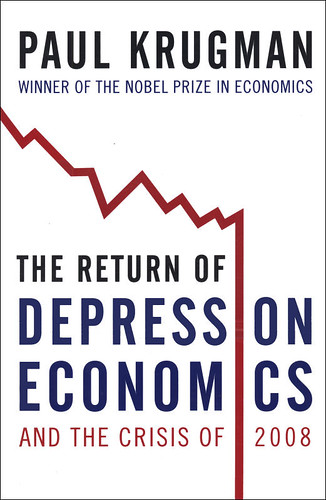
Paul Krugman - The Return of Depression Economics and the Crisis of 2008


Paul Krugman - The Return of Depression Economics and the Crisis of 2008 (2nd Edition)
W. W. Norton & Company | 2nd Edition | 2009 | ISBN: 0393071014 | 201 pages | siPDF | 2.7 MB

In 1999, in The Return of Depression Economics, Paul Krugman surveyed the economic crises that had swept across Asia and Latin America, and pointed out that those crises were a warning for all of us: like diseases that have become resistant to antibiotics, the economic maladies that caused the Great Depression were making a comeback. In the years that followed, as Wall Street boomed and financial wheeler-dealers made vast profits, the international crises of the 1990s faded from memory. But now depression economics has come to America: when the great housing bubble of the mid-2000s burst, the U.S. financial system proved as vulnerable as those of developing countries caught up in earlier crises and a replay of the 1930s seems all too possible.

In this new, greatly updated edition of The Return of Depression Economics, Krugman shows how the failure of regulation to keep pace with an increasingly out-of-control financial system set the United States, and the world as a whole, up for the greatest financial crisis since the 1930s. He also lays out the steps that must be taken to contain the crisis, and turn around a world economy sliding into a deep recession. Brilliantly crafted in Krugman's trademark style—lucid, lively, and supremely informed—this new edition of The Return of Depression Economics will become an instant cornerstone of the debate over how to respond to the crisis.

Contents

Introduction
About This Book

1. "The Central Problem Has Been Solved"
Capitalism Triumphant
The Taming of the Business Cycle
Technology as Savior
The Fruits of Globalization
Skeptics and Critics

2. Warning Ignored: Latin America's Crises
Mexico: Up from the 1980s
Argentina's Break with the Past
Mexico's Bad Year
The Tequila Crisis
The Great Rescue
Learning the Wrong Lessons

3. Japan's Trap
Japan as Number One
Bubble, Toil and Trouble
A Stealthy Depression
Japan's Trap
Japan Adrift
Japan's Recovery

4. Asia's Crash
The Boom
July 2, 1997
Meltdown
Contagion
Why Asia? Why 1997?
Epilogue: Argentina, 2002
The Deeper Question

5. Policy Perversity
How the International Monetary System Didn't Evolve
The Speculative Threat
The Confidence Game
Did the IMF Make the Situation Worse?

6. Masters Of The Universe
The Nature of the Beast
The Legend of George Soros
The Madness of Prime Minister Mahathir
The Attack on Hong Kong
The Potemkin Economy
The Panic of 1998

7. Greenspan's Bubbles
The Age of Greenspan
America's Designated Driver
Greenspan's Bubbles
When Bubbles Burst

8. Banking In The Shadows
The History of Banking, Simplified
The Shadow Banking System
Malign Neglect

9. The Sum Of All Fears
The Housing Bust and Its Fallout
The Non-Bank Banking Crisis
The Fed Loses Traction
The Mother of All Currency Crises
A Global Slump

10. The Return Of Depression Economics
What Is Depression Economics?
What to Do: Dealing with the Emergency
Financial Reform
The Power of Ideas


----------------
Now playing: Judas Priest - [Metal Works 1973 - 1993 CD 1 #00] Breaking The Law [foobar2000 v0.9.6.8]
via FoxyTunes

Michael F. Cohen, John R. Wallace - Radiosity and Realistic Image Synthesis


Michael F. Cohen, John R. Wallace - Radiosity and Realistic Image Synthesis (The Morgan Kaufmann Series in Computer Graphics):
Morgan Kaufmann | ISBN: 0121782700 | 1993-08-04 | PDF (OCR) | 381 pages | 5.84 Mb

The first comprehensive book written about Radiosity. Features applications from the fields of computer graphics, architecture, industrial design, and related computer aided design technologies. Contains a chapter authored by Pat Hanrahan on the basic concepts of image synthesis and a foreword by Donald Greenberg.

Radiosity is a computer graphics technique which makes use a global illumination model to accurately represent the inter-reflection of light between surfaces. The technique produces view-independent results, so that most of the work is complete before viewing parameters are selected. This allows efficient interactive walk-throughs of simulated environments. However, radiosity is the most computationally expensive image generation technique. Most other image generation techniques make use of local illumination models and give faster image generation times.

The method is based on engineering techniques which were originally used to calculate radiant interchange between surfaces, for applications such as boiler and radiator design. The literature available has expanded rapidly in the past ten years and until now there has been no single comprehensive source describing the available techniques. This book is a comprehensive source and is written by respected names in the field of computer graphics.

The book starts with the derivation of a global illumination model (i.e. maths) and then moves on to finite element methods and domain subdivision (i.e. more maths). The final three chapters briefly deal with image production, extensions to the basic radiosity technique and applications for radiosity, such as architectural and lighting design. The bibliography consists of 274 entries.

In order to make the most of this book you will need a solid background in computer graphics and graduate level maths. The radiosity technique is only a part of the image generation process and to make practical use of the information contained in the book you will need an existing graphics system. This will allow you to attach the radiosity elements described in the book to your existing system, once you've managed to implement them! This is _not_ a type-and-go book, like some of the ray tracing texts available. There is no disc containing a complete ready to run system and the code fragments which are given are in pseudo code. You should be prepared to invest a large amount of time and effort if you intend to produce a working system from the information contained in the book.

There are 16 pages of full colour images and over 100 illustrations to explain the development and show the results of the radiosity method. Results of applications of this new technology from a variety of fields are also included.

If you are a Computer Graphics Student or Professional then this book is something you should look at if you're serious about radiosity; there is nothing else like it available.

About the authors
Michael Cohen has worked in the area of realistic image synthesis since 1983 and was instrumental in the development of the radiosity method. He is currently an assistant professor of computer science at Princeton University. John Wallace is a software engineer at 3D/EYE, Inc., where he is the project leader for the development of Hewlett-Packard's ATRCore radiosity and ray tracing library. A chapter on the basic concepts of image synthesis is contributed by Patrick Hanrahan. He has worked on the topic of image synthesis at Pixar, where he was instrumental in the development of the Renderman software. He has also led research on the hierarchical methods at Princeton University, where he is an associate professor of computer science. All three authors have written numerous articles on radiosity that have appeared in the SIGGAPH proceedings and elsewhere.
They have also taught the SIGGRAPH course on radiosity for 5 years.


----------------
Now playing: Jose Feliciano& Marc Anthony - [? #00] Oye Guitarra Mia [foobar2000 v0.9.6.8]
via FoxyTunes

Wednesday, June 24, 2009

Roderick W. Smith - Advanced Linux Networking


Roderick W. Smith - Advanced Linux Networking
Addison Wesley | ISBN: 0201774232 | 2002 | CHM | 784 pages | 3.23 MB

With an increasing number of networks and mission-critical applications running on Linux, system and network administrators must be able to do more than set up a server and rely on its default configuration. Advanced Linux Networking is designed to help you achieve a higher level of competence. It focuses on powerful techniques and features of Linux networking and provides you with the know-how you need to improve server efficiency, enhance security, and adapt to new requirements.

This book begins with a brief introduction to low-level configuration, including a guide to getting your network up and running. Part II outlines those servers and procedures most likely to be used by the computers on your local network: DHCP servers, Kerberos, Samba, time servers, and network backups, among others. Part III covers Internet servers: DNS, SMTP (sendmail, Postfix, and Exim), Apache, and FTP servers. Part IV examines network security, exploring such topics as using a chroot jail, iptables configuration, and VPNs. Wherever pertinent, the author addresses the differences between Caldera OpenLinux, Debian GNU/Linux, Mandrake, Red Hat, Slackware, SuSE, and TurboLinux.

Specific topics covered include:

· Configuring small but potentially important servers quickly and easily

· Optimizing Linux network operation

· Using advanced system features effectively

· Using systems and software in alternative ways to reach your goals

· Avoiding possible damage to your system and violations of ISP policies

· Securing your system

Advanced Linux Networking is the single-volume tutorial and reference for Linux networking that will help you achieve expert status.


----------------
Now playing: Chris Rea - Auberge [foobar2000 v0.9.6.8]
via FoxyTunes

Monday, June 22, 2009

Валерия Новодворская - Мой Карфаген обязан быть разрушен. Из философии истории России


Валерия Новодворская - Мой Карфаген обязан быть разрушен. Из философии истории России
М.: Олимп, 1999 | ISBN 5-7390-0691-0 | 288 с. | DJVU | 1,17 MB

"Она вызовет больше споров, чем знаменитый "Ледокол" Виктора Суворова" - так отозвался о новой книге Валерии Новодворской "Мой Карфаген обязан быть разрушен" депутат Госдумы Константин Боровой, выступивший 1 июня в редакции журнала "Новое время" на презентации издания.

Напомним, в "Ледоколе" автор выдвинул версию о том, что в июле 1941 года Сталин планировал напасть на Германию. Книга Новодворской подобных сенсаций не содержит, она отражает точку зрения автора на известные события российской истории. Выпущенный издательством "Олимп" сборник представляет собой цикл лекций, прочитанных ранее Новодворской в Российском государственном гуманитарном университете.

Сама Новодворская называет себя "катакомбным исследователем". Если же говорить об основной идее книги, то она выражена следующими словами: "В нашей истории дуют жестокие ветры и горят костры, в ней мы, наследники славянской и скандинавской традиций, сражаемся с носителями традиций византийской и ордынской".

Расшифровке этой мысли посвящены авторские размышления. Знаменитое "пришествие варягов" принесло славянам дух свободы, а главное - готовность свободу защищать. Весь менталитет скандинавов, викингов, был направлен именно на это. Их мифология трагична: Зло побеждает, защитники Добра - асы и ваны - погибают. Однако предчувствие мрачного конца не лишало скандинавов мужества и готовности противостоять Злу. Они никогда не сдавались в плен, скандинавов нет на рабских рынках раннего средневековья. Вместе с тем предки датчан, шведов и норвежцев уже тогда закладывали основы демократии. Все вопросы решались на так называемых "тингах", прообразах современных парламентов. Вот и русские князья, потомки скандинавских пришельцев, почитали за правило советоваться со своими приближёнными, не принимать единоличных решений.

Так было на Руси до тех пор, пока не пришла традиция византийская, которая подразумевает полное подчинение подданных власти, жестокое подавление личности.

Что касается начал ордынских, то Новодворская характеризует их следующим образом: "Это традиции совершенно бесполезного, бесплатного, платонического угнетения, платонического захвата. Захвата ради захвата... Уничтожим всё во имя уничтожения. Захватим всех во имя несвободы". Комментируя утверждение историка Льва Гумилёва, который в отличие от своего отца, знаменитого поэта, "западником" не был и считал монголо-русский союз весьма плодотворным, Новодворская замечает, что Лев Николаевич и попал в ГУЛАГ именно потому, что состоялось монголо-татарское нашествие. Ведь большевизм с его идеологией - логическое продолжение психологии ордынской.

Носители же благородной скандинавской традиции не выклянчивали у ханов "ярлыки", то есть разрешение на право властвовать, а боролись за свободу. Примеры чему - Евпатий Коловрат, князь Михаил Тверской, его сын Александр.

Новодворская сурово осуждает тех, в ком нет духа Сопротивления. Не должны были белые армии в 1920 году эвакуироваться из Крыма, а должны были стоять до конца. Тирания побеждает там, где ей не сопротивляются. "Концлагерь состоит из заключённых, которые соглашаются жить по тем законам, что устанавливают для них палачи. Концлагерь - это консенсус между жертвами и палачами, это их взаимное согласие на сотрудничество. Ни один лагерь ГУЛАГа, ни один немецкий концлагерь времён Второй мировой войны не мог бы существовать, если бы жертвы отказывались идти в газовые камеры или на лесоповал... если бы жертвы, которых было больше, чем палачей, просто отбирали бы у них оружие, убивали бы их, ломали бы колючую проволоку и уходили куда-нибудь подальше".


* * *

Из вступления:

"Проблема России - в том, что ее граждане не хотят быть свободными. Они не ценят свободу, не думают о ней - и вообще она в России не котируется. Все это можно было бы свалить на "тысячелетнее рабство", как постоянно и делается - одни указывают на коммунизм, Гулаг и колхозы, другие - на царя и крепостное право, третьи - на монголо-татар - словом, кому что больше нравится. "Не сами, по родителям". Только вот беда: отмазка не канает. Традиция рабства тут ни при чем. Отсутствием интереса - а точнее, любви к свободе - ныне активное поколение обладает само по себе. В самом деле, нынешних россиян никто особенно не притеснял! Взрослели они кто в вегетарианское хрущевско-брежневское время, кто в перестройку, ничего страшнее потешных андроповских рейдов по кинотеатрам не застали, все наблюдали кризис беспомощности позднесоветской и постсоветской власти до состояния почти полной анархии. И на месте "привычного угнетения" обнаруживается - отсутствие у самого обычного, рядового гражданина России иной мотивации, кроме материальной, и страх перед всем и каждым. Все решает действие гражданина, одного гражданина. Монголы и русичи в земле. Крепостники и крепостные в земле. Большевики и белые в земле. Лихие энкеведешники и вохровцы тоже в земле. Все это было, этого больше нет. Здесь и сейчас живем только мы с вами. Действовать должен ныне живущий, но каждый из тех, кто мог действовать, и все они вместе - бездействуют. А это значит, что во всем виноват ты, читающий мои строки. Не общество в целом, а ты. Не столетия крепостного рабства, а ты. Не коммунистический режим - а ты лично. Это в твоей груди - сердце спрута. Сердце жадины. Сердце приспособленца. Сердце труса. Это ты во всем виноват. В России нет демократии потому, что ты ценишь свою жалкую шкуру выше чести. Странно, что ты до сих пор не понял, что спасти шкуру ценой чести нельзя. Выбирающий между жизнью и честью честь получает и жизнь и честь; выбирающий жизнь вместо чести лишается сперва чести, а потом и жизни. Это непреложный закон мира. Это научный факт. Впрочем, зачем я говорю это тебе? Еще столетия назад Бен Франклин сказал: "Меняющие свободу на безопасность не заслуживают ни безопасности, ни свободы". Конечно, в России свято верят каждому, кто называет себя ученым, но поможет ли это? Если Франклину не верят, поверят ли Вельзелю? Страх иррационален. Сердце труса отключает разум. Чтобы стать свободным, надо этого захотеть. Не денег, не власти, не благ мира, которые она якобы принесет с собой - а самой свободы. Не торговаться со своей свободой - "а что я получу взамен" - а просто влюбиться в нее, и она ответит взаимностью."


Об авторе от автора:

Автор этих лекций - катакомбный историк. Это значит - не патентованный, без лицензии и диплома истфака.

До 1991 года ни один честный диссидент не мог учиться или защищаться на историческом, ибо история была мертвой зоной КПСС, КГБ и прочих милых организаций. А до 1991 г. автор успел перечитать всех русских и половину импортных историков из сундуков Иностранки, этого оазиса чистой науки, куда пускали всех и давали все, даже Шпенглера, видно, рассчитывая, что владеющих до такой степени иностранными языками в России или не найдется, или они сбегут за кордон, или просто погоду не сделают. Так что на истфак стало идти незачем. Можно было смело идти и читать лекции юным историкам в РГГУ и других местах. Автор и пошел.

К тому же автор, родившийся в 1950 г., успел впутаться в историю в прямом и переносном смысле, создав в Инязе еще в 1969 г. подпольную студенческую организацию с далеко идущими задачами: свержение власти КПСС вооруженным путем, народное восстание, построение капитализма, ликвидация Варшавского договора, роспуск СССР... Примерно это же и значилось в листовках, которые автор открыто бросал с балкона Дворца Съездов 5 декабря 1969 г., в день Конституции, на опере "Октябрь". Потом, естественно, было Лефортово, статья 70 об антисоветской пропаганде, казанская спецтюрьма... А потом, после 1972 г., было полно столь же детективных историй: контрабандное поступление на иностранный факультет пединститута, его контрабандное окончание, участие в диссидентском движении, тиражирование Самиздата, листовки, листовки, листовки, аресты, аресты, аресты... Горбачевская перестройка 1986 г. застала автора в Лефортово, но благодарности за освобождение бедный Михаил Сергеевич не получил. Далее был создан ДС - Демократический Союз, и все повторилось: митинги, листовки, демонстрации, разгоны, избиения, аресты. ГКЧП автора посадить не смогло: автор уже сидел в Лефортово с мая 1991 г. за предложение опять-таки свергнуть власть КПСС вооруженным путем - после Вильнюса. С тех пор выпущенный окончательно подчистую отовсюду автор ведет оседлый образ жизни, пишет статьи в крутой либеральный еженедельник "Новое время" и даже допущен там в члены редколлегии, но порох держит сухим на случай возвращения коммунистов к власти. Автора больше не сажают, но два года, с 1995 по 1996-ой, судили за нежелательную, непатриотическую, неприемлемую для коммунистов и национал-"патриотов" трактовку русской истории, то есть почти как генетиков и кибернетиков - за лженауку, причем буржуазную. То есть за данный курс лекций. Так что автор - не только участник истории, но и ее соучастник, а книга сия - чуть ли не триллер. По крайней мере, саспенс и боевик. Не хуже Дэвида Линча с его "Твин Пикс".


----------------
Now playing: Jose Feliciano& Marc Anthony - [? #00] Oye Guitarra Mia [foobar2000 v0.9.6.8]
via FoxyTunes

Saturday, June 20, 2009

Richard Davis - Typing Politics: The Role of Blogs in American Politics


Richard Davis - Typing Politics: The Role of Blogs in American Politics
Oxford University Press | English | 2009-05-26 | ISBN: 0195373766 | 256 pages | PDF | 1,4 MB

The power of political blogs in American politics is now evident to anyone who follows it. In Typing Politics, Richard Davis provides a comprehensive yet concise assessment of the growing role played by political blogs and their relationship with the mainstream media. Through a detailed content analysis of the most popular political blogs--Daily Kos, Instapundit, Michelle Malkin, and Wonkette--he shows the degree to which blogs influence the traditional news media. Specifically, he compares the content of these blogs to four leading newspapers noted for their political coverage: The Washington Post, The New York Times, The Wall Street Journal, and The Washington Times. He explains how political journalists at these papers use blogs to inform their reportage and analyzes general attitudes about the role of blogs in journalism. Drawing on a national survey of political blog readers, Davis concludes with a novel assessment of the blog audience. Compact, accessible, and well-researched, Typing Politics will be an invaluable contribution to the literature on a phenomenon that has reshaped the landscape of political communication.


"Political blog reading has become a daily activity for a small minority of political activists. One former State Department spokesperson said, “They’re the fi rst thing I read when I get up in the morning and the last thing I read at night.”13 A reporter for the New Republic said he reads ten to fi fteen blogs daily. One likely reason for the increased public awareness of blogs is news
media coverage of the blogging phenomenon. Coverage mushroomed in only fi ve years: there were three newspaper stories about blogs in 1999, 209 in 2001, 1,442 in 2003, and 3,212 in 2004.
A medium that acquires a significant audience and discusses politics constantly is bound to be considered of some political importance. The claims of blogging’s role, present and future, are hardly modest, and the most vocal advocates are bloggers themselves. Liberal bloggers believe they already have altered electoral outcomes. They claim they defeated Senator Joe Lieberman
(D-Connecticut) in the 2006 senatorial primary, although Lieberman, as an Independent, defeated blogger favorite Ned Lamont in the general election that year. Another claimed victory was the Democratic takeover of the U.S...Senate and House of Representatives in 2006. Liberal bloggers take credit for making possible the U.S. Senate wins of senators Sherrod Brown (D-Ohio), Jon Tester (D-Montana), Jim Webb (D-Virginia), and other Democratic candidates
that year.16 Conservative bloggers point to their own victories as well. They argue that they were instrumental in causing the withdrawal of U.S. Supreme Court nominee Harriet Miers. They also point to the early retirement of CBS News anchor Dan Rather after an embarrassing 60 Minutes II scandal as a blog triumph.
But these events are small potatoes compared to what many foresee as the broader role of the blogosphere. Specifi cally, news stories about blogs have emphasized the medium as a new tool for personal empowerment. One journalist opined that blogs have “given the average Jane the ability to write, edit, design, and publish her own editorial product—to be read and responded to by millions of people, potentially—for around $0 to $200 a year.”17 They emphasize
how “Joe Average Blogger” can revolutionize politics through blogging..." -- from Introduction


----------------
Now playing: Pink Floyd - WAR OF THE WORLDS (Album Complete Rare) [foobar2000 v0.9.6.8]
via FoxyTunes