Saturday, May 30, 2009

The Human Resources Glossary, Third Edition: The Complete Desk Reference for HR Executives, Managers, and Practitioners


The Human Resources Glossary, Third Edition: The Complete Desk Reference for HR Executives, Managers, and Practitioners
Publisher: CRC Press LLC 2003 | ISBN: 1574443518 | PDF | 840 pages | 3,57 mb

The fast paced world of human resources (HR) management, development, and utilization requires HR professionals to fill many roles and speak many "languages." The Human Resources Glossary answers the demand for a single authoritative source that compiles and explains the vocabulary of HR practitioners. This glossary defines HR terms and explains their context, use, and managerial implications in 56 of the most important HR areas, including benefits, compensation, disability, discipline, employee services, health care, organization development, productivity, hiring practices, employee testing, training, travel management, meeting management, and work measurement.


Friday, May 29, 2009

Narcis Serra, Joseph E. Stiglitz (Editors)- The Washington Consensus Reconsidered: Towards a New Global Governance


Narcis Serra, Joseph E. Stiglitz (Editors) - The Washington Consensus Reconsidered: Towards a New Global Governance
Publisher: Oxford University Press 2008 | ISBN: 0199534098 | PDF | 384 pages | 1,88 mb

This volume brings together many of the leading international figures in development studies, such as 2008 Nobel Prize in Economics winner Paul Krugman, Jose Antonio Ocampo, Dani Rodrik, Joseph Stiglitz, Daniel Cohen, Olivier Blanchard, Deepak Nayyer and John Williamson to reconsider and propose alternative development policies to the Washington Consensus. Covering a wide range of issues from macro-stabilization to trade and the future of global governance, this important volume makes a real contribution to this important and ongoing debate.
The volume begins by introducing the Washington Consensus, discussing how it was originally formulated, what it left out, and how it was later interpreted, and sets the stage for a formulation of a new development framework in the post-Washington Consensus era. It then goes on to analyze and offer differing perspectives and potential solutions to a number of key development issues, some which were addressed by the Washington Consensus and others which were not. The volume concludes by looking toward formulating new policy frameworks and offers possible reforms to the current system of global governance.


Part I The Washington Consensus: From Its Origins to Its Critics

1. Introduction: From the Washington Consensus Towards a New Global Governance
Narcís Serra, Shari Spiegel, and Joseph E. Stiglitz

2. A Short History of the Washington Consensus
John Williamson

3. Inequality and Redistribution
Paul Krugman

4. Is there a Post-Washington Consensus Consensus?
Joseph E. Stiglitz

5. The Barcelona Development Agenda

Part II Analyses of Central Issues in Development

6. A Broad View of Macroeconomic Stability
José Antonio Ocampo

7. The Wild Ones: Industrial Policies in the Developing World
Alice H. Amsden

8. Sudden Stop, Financial Factors, and Economic Collapse in Latin America: Learning from Argentina and Chile
Guillermo A. Calvo and Ernesto Talvi

9. Towards a New Modus Operandi of the International Financial System
Daniel Cohen

10. The World Trading System and Implications of External Opening
Jeffrey A. Frankel

11. The World Trading System and Development Concerns
Martin Khor

12. Reforming Labor Market Institutions: Unemployment Insurance and Employment Protection
Olivier Blanchard

13. International Migration and Economic Development
Deepak Nayyar

Part III Towards a New Global Governance

14. The Future of Global Governance
Joseph E. Stiglitz

15. Growth Diagnostics
Ricardo Hausmann, Dani Rodrik, and Andrés Velasco

16. A Practical Approach to Formulating Growth Strategies
Dani Rodrik


Thursday, May 28, 2009

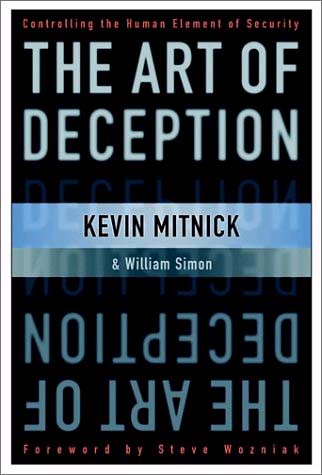
Kevin D. Mitnick - The Art of Deception: Controlling the Human Element of Security


Kevin D. Mitnick - The Art of Deception: Controlling the Human Element of Security
Publisher: Wiley | ISBN: 076454280X | edition 2003 | PDF | 577 pages | 3,61 mb

Mitnick is the most famous computer hacker in the world. Since his first arrest in 1981, at age 17, he has spent nearly half his adult life either in prison or as a fugitive. He has been the subject of three books and his alleged 1982 hack into NORAD inspired the movie War Games. Since his plea-bargain release in 2000, he says he has reformed and is devoting his talents to helping computer security. It's not clear whether this book is a means toward that end or a, wink-wink, fictionalized account of his exploits, with his name changed to protect his parole terms. Either way, it's a tour de force, a series of tales of how some old-fashioned blarney and high-tech skills can pry any information from anyone. As entertainment, it's like reading the climaxes of a dozen complex thrillers, one after the other. As a security education, it's a great series of cautionary tales; however, the advice to employees not to give anyone their passwords is bland compared to the depth and energy of Mitnick's descriptions of how he actually hacked into systems. As a manual for a would-be hacker, it's dated and nonspecific better stuff is available on the Internet but it teaches the timeless spirit of the hack. Between the lines, a portrait emerges of the old-fashioned hacker stereotype: a socially challenged, obsessive loser addicted to an intoxicating sense of power that comes only from stalking and spying.


Contents
Foreword
Preface
Introduction

Part 1. Behind the Scenes
Chapter 1. Security's Weakest Link

Part 2. The Art of the Attacker
Chapter 2. When Innocuous Information Isn't
Chapter 3. The Direct Attack: Just Asking for it
Chapter 4. Building Trust
Chapter 5. "Let Me Help You"
Chapter 6. "Can You Help Me?"
Chapter 7. Phony Sites and Dangerous Attachments
Chapter 8. Using Sympathy, Guilt and Intimidation
Chapter 9. The Reverse Sting

Part 3 Intruder Alert
Chapter 10. Entering the Premises
Chapter 11. Combining Technology and Social Engineering
Chapter 12. Attacks on the Entry-Level Employee
Chapter 13. Clever Cons
Chapter 14. Industrial Espionage

Part 4 Raising the Bar
Chapter 15. Information Security Awareness and Training
Chapter 16. Recommended Corporate Information Security Policies

Security at a Glance
Sources
Acknowledgments


Wednesday, May 27, 2009

Nassim Nicholas Taleb - The Black Swan: The Impact of the Highly Improbable


Nassim Nicholas Taleb - The Black Swan: The Impact of the Highly Improbable
Publisher: Random House 2007 | 366 Pages | ISBN: 1400063515 | PDF | 7 MB

Four hundred years ago, Francis Bacon warned that our minds are wired to deceive us. "Beware the fallacies into which undisciplined thinkers most easily fall--they are the real distorting prisms of human nature." Chief among them: "Assuming more order than exists in chaotic nature." Now consider the typical stock market report: "Today investors bid shares down out of concern over Iranian oil production." Sigh. We're still doing it.

Our brains are wired for narrative, not statistical uncertainty. And so we tell ourselves simple stories to explain complex thing we don't--and, most importantly, can't--know. The truth is that we have no idea why stock markets go up or down on any given day, and whatever reason we give is sure to be grossly simplified, if not flat out wrong.

Nassim Nicholas Taleb first made this argument in Fooled by Randomness, an engaging look at the history and reasons for our predilection for self-deception when it comes to statistics. Now, in The Black Swan: the Impact of the Highly Improbable, he focuses on that most dismal of sciences, predicting the future. Forecasting is not just at the heart of Wall Street, but it’s something each of us does every time we make an insurance payment or strap on a seat belt.

The problem, Nassim explains, is that we place too much weight on the odds that past events will repeat (diligently trying to follow the path of the "millionaire next door," when unrepeatable chance is a better explanation). Instead, the really important events are rare and unpredictable. He calls them Black Swans, which is a reference to a 17th century philosophical thought experiment. In Europe all anyone had ever seen were white swans; indeed, "all swans are white" had long been used as the standard example of a scientific truth. So what was the chance of seeing a black one? Impossible to calculate, or at least they were until 1697, when explorers found Cygnus atratus in Australia.

Nassim argues that most of the really big events in our world are rare and unpredictable, and thus trying to extract generalizable stories to explain them may be emotionally satisfying, but it's practically useless. September 11th is one such example, and stock market crashes are another. Or, as he puts it, "History does not crawl, it jumps." Our assumptions grow out of the bell-curve predictability of what he calls "Mediocristan," while our world is really shaped by the wild powerlaw swings of "Extremistan."


Tuesday, May 26, 2009

Виктор Пелевин - П5. Прощальные песни политических пигмеев Пиндостана


Виктор Пелевин - П5. Прощальные песни политических пигмеев Пиндостана
Издательство: Эксмо, 2008 | 288 стр. | ISBN: 067232993X | PDF |0,7 MB

Новая книга Виктора Пелевина "П5: прощальные песни политических пигмеев Пиндостана" появилась на книжных прилавках 5 октября - дата, несомненно, продуманная писателем, который каждый свой шаг предварительно раскидывает по И-цзин - ах, все эти неслучайные пятерки. За три недели сборник из пяти рассказов (Зал поющих кариатид, Кормление крокодила Хуфу, Некромент, Пространство Фридмана, Ассасин) не прочитал только ленивый, книга уверенно вытеснила конкурентов с прилавков книжных магазинов, возглавила списки продаж, вызвала предсказуемое жужжание блогосферы, которое, однако, совсем не назовешь восторженным. Новых поклонников у Пелевина поди что и нет, а старые не нашли в его книге ничего для себя нового и слегка разочаровались. Да и о чем разговор - 300 страниц крупным шрифтом, 5 рассказов, ни один из которых не дотягивает даже до повести. Но зато современность так ловко поймана, что уже и сомневаешься, правда ли писатель-затворник творит где-то на вершине Килиманджаро, а не сидит круглосуточно в своем Чертаново, читая новости в гугл-ридере и человеческие глупости в ЖЖ. Потому-то нам все еще нужен Пелевин, хотя время его, как говорят многие, уже прошло.

Духовная близость с инфузорией-туфелькой от Prada

"Что же касается духовной близости с какой-нибудь из этих инфузорий-туфелек от Prada, то о ней мы просто не будем говорить в целях экономии места..."

Пелевин, конечно, принадлежит 90-м, как никакой другой русский писатель, - оглядываясь назад, начинаешь подозревать, что больше никого там и не было. Ну, разве что, Сорокин зимовал - ждал, как и все, конкретных, понятных, нулевых. Такая была особенность эпохи: все непонятно, очень изменчиво и немножко стыдно; в толпе новых людей и странных явлений не находился ни герой, ни дух эпохи. Писатель, как существо чересчур хорошо воспитанное, старательно отворачивался и смотрел куда-то в сторону. На что угодно, только не на то, как Россия, проснувшись от дурного сна, натягивает на голое немытое тело новые ажурные чулки. 90-е ждали, что вот-вот появится автор, которому удастся ухватить за хвост новое время, а Пелевин не писал про время. Он писал про поколение. И в романах "Омон Ра", "Жизнь насекомых", "Чапаев и Пустота", и в завершающей, чуть ли не главной книге десятилетия "Generation П" практически прозрел образ нового человека - существа, стремящегося к духовному прозрению при абсолютной, совершенной внутренней пустоте. О том же - если вчитаться - и новые рассказы: о поисках и обретении рая. И о разнице между раем земным и небесным.

Хорошенькая блондинка Лена из первого рассказа "П5" "Зал поющих кариатид" открывает для себя этот неземной рай - реку в голове богомола. Попадая туда перед смертью, Лена думает: "Интересно, а что во мне? Неужели такое же серое и смрадное? Сейчас вот и узнаем... Нет, не такое. Вот оно. Оно яркое... Светлое... Чистое... Какая все-таки красота...". Вот. Оно. Какой бы ты ни был здесь дурачок, а там лучше. Потому что даже местная dolce vita превратилась в такой ад, что там, по ту сторону, несомненно - рай.

Оставили один пиар

"Самка cardiacephala myrmex ест отрыгиваемую самцом пищу прямо у него изо рта - из этого, кстати, через двести миллионов лет произошел ваш человеческий поцелуй, только люди, как всегда, убрали содержательную часть и оставили один пиар".

В одной из лучших пелевинских книг, "Generation П", писатель нашел крайнего. Это рекламщики в ответе за девальвацию смысла. Это они продают за деньги слоганы типа "Солидный Господь для солидных господ", лишая всякой духовной ценности и господ, и Господа. Реклама - новая религия, ее главная цель - продавать, неважно что: Бога, президента или сережки от Армани. Но главный объект продажи - русская национальная идея, из которой убирается вся содержательная часть - остается один пиар.

У нас есть Сорокин, который пишет о русской метафизике, и Пелевин, которого интересует русская эзотерика. А сердце и той, и другой бьется в Кремле. Пелевинских поклонников возмутила в последней книге именно это - кремлецентричность. Какого черта его вообще потянуло в мир политтехнологов, глянцевых журналов (земной поклон за выражение "православный глянец") и олигархов? Но в стране, где так долго и мучительно строится вертикаль, любого писателя, обладающего каким-никаким чутьем, рано или поздно затягивает в эту воронку. Эта смена места совершенно логична в контексте кремлевского пиар-одурения, в котором живет большая часть населения страны.

Вершина Фудзи

"В будущем каждая улитка попадет на вершину Фудзи на 15 минут".

В чем Пелевин может совершенствоваться до бесконечности - это в своих выдумках и языковых играх. "П5", как и все прочие книги автора, можно смело растаскивать на цитаты. Чего стоит "православный глянец" и издательство "Маргинальный Ад", русский философ Голгофский и математик Рапидшер Вербицкий? А "багряноносный Святой Георгины первый линейный отряд ГИБДД города Москвы"? "Слышите эти раскаты багрового "эр" - прямо как у Пушкина в "Полтаве"?" Единственный минус этой языковой насыщенности - чудовищно от нее в итоге устаешь. Но кто обещал, что будет легко?

Вот оттуда вся эта задушевность и пошла

"Нам потом уже рассказали, что он для этой новой искренности бирманские таблетки жрал, называются "yaa baa", нечто вроде амфетамина, только на органической основе. Они вроде как влияют на дыхательный центр и придают всему, что человек придумывает в этом состоянии, сильную эмоциональную заразительность. Тогда в Москве проходила большая партия, и вся гопота работала только на них. Вот оттуда эта задушевность и пошла".

Про "новую искренность" смешно - тонкая и справедливая издевка над любимым романтическим стилем блоггеров, как-то связанным с эмо-челками, Земфирой и расцветом современной поэзии. Все пелевинские герои продолжают жрать всякую дрянь для прихода к озарениям. Бог знает, для чего они это делают. Но вот Али, герой рассказа-притчи "Ассасин", отказывается от лепешки с гашишом, открывающей ему дорогу в рай земной, ради рая небесного. Это тянет на начало большой новой истории: наряду с искусственным выходом, галлюцинацией от чрезмерного употребления всякой дряни, есть выход настоящий. Но вот до сих пор ни один из пелевинских героев не видел его с той стороны.

Прекрасное и невыразимое

"И пусть на этом пути ваши сердца озарит то прекрасное и невыразимое, что Боря Гребенщиков называет делом мастера Бо, а простые люди вроде меня - трансцендентально-экстралингвистическим императивом".

Как говорят англичане, great minds think alike. У Пелевина есть много соратников в литературах дальнего и ближнего зарубежья. Во Франции - Бегбедер, который всегда рад поиздеваться над обществом потребления, но в самый нужный момент совершенно не к месту пускает слезу и все портит. В Германии - Кристиан Крахт, который вообще-то пишет все то же самое, но с эзотерикой не в ладах. А еще боится, что его воспримут всерьез и перестанут покупать, и переводит все в шутку. Из-за этого от его романов остается только чувство легкого недоумения. Вся английская литература, от шутника Уилла Сэлфа до комика Бена Элтона, занимается метафизикой абсурда. Пелевин от всех них отличается тем, что он все-таки русский писатель, который не может без "духовного", и совсем не постмодернист.

Постмодернизм происходит от открытия, что события и предметы не имеют никакого смысла. Рассыпаясь, вещи обнаруживают свою полую сущность. У Пелевина вещи не полые. Конденсированная ежедневная галиматья, жизнь насекомых, обнаруживает за собой присутствие Бога. Зрячие увидят. Имеющие уши услышат. И это должна была быть радостная новость для поклоняющегося Пелевину офисного планктона: за всем этим копошением еще есть какой-то смысл. Но глянцевый засор мозга настолько не поддается очистке, что пелевинские шуточки уже не лечат, а только еще больше засоряют голову. Человек, отравленный галиматьей, увидит в "П5" только новую галиматью. Таково хитроумное устройство его текстов: в каждой шутке есть доля всего на свете. Пелевин кончится только тогда, когда нам надоест ломать над этим голову.