Tuesday, December 17, 2013

Тило Саррацин - Германия: самоликвидация


Тило Саррацин - Германия: самоликвидация - pdf  - перевод: Татьяна Алексеевна Набатникова

Оглавление


Friday, September 20, 2013

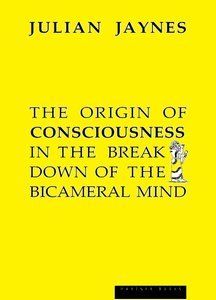
Julian Jaynes - The Origin of Consciousness in the Breakdown of the Bicameral Mind

Julian Jaynes - The Origin of Consciousness in the Breakdown of the Bicameral Mind

Mariner Books | 2000 | ISBN-10 0618057072, ISBN-13 978-0618057078 | Language: English | 512 pages | PDF | 3 MB

At the heart of this seminal work is the revolutionary idea that human consciousness did not begin far back in animal evolution but was a learned process that emerged, through cataclysm and catastrophe, from a hallucinatory mentality only three thousand years ago and that is still developing. The implications of this scientific paradigm extend into virtually every aspect of our psychology, our history, our culture, our religion — indeed our future. In the words of one reviewer, it is “a humbling text, the kind that reminds most of us who make our livings through thinking, how much thinking there is left to do.” “When Julian Jaynes . . . speculates that until late in the second millennium B.C. men had no consciousness but were automatically obeying the voices of gods, we are astounded but compelled to follow this remarkable thesis through all the corroborative evidence.” — John Updike, The New Yorker “This books and this mans ideas may be the most influential, not to say controversial, of the second half of the twentieth century. It renders whole shelves of books obsolete.” — William Harrington, Columbus Dispatch “Having just finished The Origin of Consciousness, I myself feel something like Keats’ Cortez staring at the Pacific, or at least like the early reviewers of Darwin or Freud. I’m not quite sure what to make of this new territory; but its expanse lies before me and I am startled by its power.” — Edward Profitt, Commonweal “He is as startling as Freud was in The Interpretation of Dreams, and Jaynes is equally adept at forcing a new view of known human behavior.” — Raymond Headlee, American Journal of Psychiatry “The weight of original thought in [this book] is so great that it makes me uneasy for the author’s well-being: the human mind is not built to support such a burden.”— D. C. Stove, Encounter
Read more at http://ebookee.org/The-Origin-of-Consciousness-in-the-Breakdown-of-the-Bicameral-Mind_1154859.html#oVDsRjHHD66hZMQ5.99

At the heart of this seminal work is the revolutionary idea that human consciousness did not begin far back in animal evolution but was a learned process that emerged, through cataclysm and catastrophe, from a hallucinatory mentality only three thousand years ago and that is still developing. The implications of this scientific paradigm extend into virtually every aspect of our psychology, our history, our culture, our religion — indeed our future. In the words of one reviewer, it is “a humbling text, the kind that reminds most of us who make our livings through thinking, how much thinking there is left to do.” “When Julian Jaynes . . . speculates that until late in the second millennium B.C. men had no consciousness but were automatically obeying the voices of gods, we are astounded but compelled to follow this remarkable thesis through all the corroborative evidence.” — John Updike, The New Yorker “This books and this mans ideas may be the most influential, not to say controversial, of the second half of the twentieth century. It renders whole shelves of books obsolete.” — William Harrington, Columbus Dispatch “Having just finished The Origin of Consciousness, I myself feel something like Keats’ Cortez staring at the Pacific, or at least like the early reviewers of Darwin or Freud. I’m not quite sure what to make of this new territory; but its expanse lies before me and I am startled by its power.” — Edward Profitt, Commonweal “He is as startling as Freud was in The Interpretation of Dreams, and Jaynes is equally adept at forcing a new view of known human behavior.” — Raymond Headlee, American Journal of Psychiatry “The weight of original thought in [this book] is so great that it makes me uneasy for the author’s well-being: the human mind is not built to support such a burden.”— D. C. Stove, Encounter
Read more at http://ebookee.org/The-Origin-of-Consciousness-in-the-Breakdown-of-the-Bicameral-Mind_1154859.html#oVDsRjHHD66hZMQ5.99
At the heart of this seminal work is the revolutionary idea that human consciousness did not begin far back in animal evolution but was a learned process that emerged, through cataclysm and catastrophe, from a hallucinatory mentality only three thousand years ago and that is still developing. The implications of this scientific paradigm extend into virtually every aspect of our psychology, our history, our culture, our religion — indeed our future. In the words of one reviewer, it is “a humbling text, the kind that reminds most of us who make our livings through thinking, how much thinking there is left to do.” “When Julian Jaynes . . . speculates that until late in the second millennium B.C. men had no consciousness but were automatically obeying the voices of gods, we are astounded but compelled to follow this remarkable thesis through all the corroborative evidence.” — John Updike, The New Yorker “This books and this mans ideas may be the most influential, not to say controversial, of the second half of the twentieth century. It renders whole shelves of books obsolete.” — William Harrington, Columbus Dispatch “Having just finished The Origin of Consciousness, I myself feel something like Keats’ Cortez staring at the Pacific, or at least like the early reviewers of Darwin or Freud. I’m not quite sure what to make of this new territory; but its expanse lies before me and I am startled by its power.” — Edward Profitt, Commonweal “He is as startling as Freud was in The Interpretation of Dreams, and Jaynes is equally adept at forcing a new view of known human behavior.” — Raymond Headlee, American Journal of Psychiatry “The weight of original thought in [this book] is so great that it makes me uneasy for the author’s well-being: the human mind is not built to support such a burden.”— D. C. Stove, Encounter
Read more at http://ebookee.org/The-Origin-of-Consciousness-in-the-Breakdown-of-the-Bicameral-Mind_1154859.html#oVDsRjHHD66hZMQ5.99
At the heart of this seminal work is the revolutionary idea that human consciousness did not begin far back in animal evolution but was a learned process that emerged, through cataclysm and catastrophe, from a hallucinatory mentality only three thousand years ago and that is still developing. The implications of this scientific paradigm extend into virtually every aspect of our psychology, our history, our culture, our religion — indeed our future. In the words of one reviewer, it is “a humbling text, the kind that reminds most of us who make our livings through thinking, how much thinking there is left to do.” “When Julian Jaynes . . . speculates that until late in the second millennium B.C. men had no consciousness but were automatically obeying the voices of gods, we are astounded but compelled to follow this remarkable thesis through all the corroborative evidence.” — John Updike, The New Yorker “This books and this mans ideas may be the most influential, not to say controversial, of the second half of the twentieth century. It renders whole shelves of books obsolete.” — William Harrington, Columbus Dispatch “Having just finished The Origin of Consciousness, I myself feel something like Keats’ Cortez staring at the Pacific, or at least like the early reviewers of Darwin or Freud. I’m not quite sure what to make of this new territory; but its expanse lies before me and I am startled by its power.” — Edward Profitt, Commonweal “He is as startling as Freud was in The Interpretation of Dreams, and Jaynes is equally adept at forcing a new view of known human behavior.” — Raymond Headlee, American Journal of Psychiatry “The weight of original thought in [this book] is so great that it makes me uneasy for the author’s well-being: the human mind is not built to support such a burden.”— D. C. Stove, Encounter
Read more at http://ebookee.org/The-Origin-of-Consciousness-in-the-Breakdown-of-the-Bicameral-Mind_1154859.html#oVDsRjHHD66hZMQ5.99
At the heart of this seminal work is the revolutionary idea that human consciousness did not begin far back in animal evolution but was a learned process that emerged, through cataclysm and catastrophe, from a hallucinatory mentality only three thousand years ago and that is still developing. The implications of this scientific paradigm extend into virtually every aspect of our psychology, our history, our culture, our religion — indeed our future. In the words of one reviewer, it is “a humbling text, the kind that reminds most of us who make our livings through thinking, how much thinking there is left to do.” “When Julian Jaynes . . . speculates that until late in the second millennium B.C. men had no consciousness but were automatically obeying the voices of gods, we are astounded but compelled to follow this remarkable thesis through all the corroborative evidence.” — John Updike, The New Yorker “This books and this mans ideas may be the most influential, not to say controversial, of the second half of the twentieth century. It renders whole shelves of books obsolete.” — William Harrington, Columbus Dispatch “Having just finished The Origin of Consciousness, I myself feel something like Keats’ Cortez staring at the Pacific, or at least like the early reviewers of Darwin or Freud. I’m not quite sure what to make of this new territory; but its expanse lies before me and I am startled by its power.” — Edward Profitt, Commonweal “He is as startling as Freud was in The Interpretation of Dreams, and Jaynes is equally adept at forcing a new view of known human behavior.” — Raymond Headlee, American Journal of Psychiatry “The weight of original thought in [this book] is so great that it makes me uneasy for the author’s well-being: the human mind is not built to support such a burden.”— D. C. Stove, Encounter
Read more at http://ebookee.org/The-Origin-of-Consciousness-in-the-Breakdown-of-the-Bicameral-Mind_1154859.html#oVDsRjHHD66hZMQ5.99
At the heart of this seminal work is the revolutionary idea that human consciousness did not begin far back in animal evolution but was a learned process that emerged, through cataclysm and catastrophe, from a hallucinatory mentality only three thousand years ago and that is still developing. The implications of this scientific paradigm extend into virtually every aspect of our psychology, our history, our culture, our religion — indeed our future. In the words of one reviewer, it is “a humbling text, the kind that reminds most of us who make our livings through thinking, how much thinking there is left to do.” 

“When Julian Jaynes . . . speculates that until late in the second millennium B.C. men had no consciousness but were automatically obeying the voices of gods, we are astounded but compelled to follow this remarkable thesis through all the corroborative evidence.” — John Updike, The New Yorker 

“This books and this mans ideas may be the most influential, not to say controversial, of the second half of the twentieth century. It renders whole shelves of books obsolete.” — William Harrington, Columbus Dispatch 

“Having just finished The Origin of Consciousness, I myself feel something like Keats’ Cortez staring at the Pacific, or at least like the early reviewers of Darwin or Freud. I’m not quite sure what to make of this new territory; but its expanse lies before me and I am startled by its power.” — Edward Profitt, Commonweal 

“He is as startling as Freud was in The Interpretation of Dreams, and Jaynes is equally adept at forcing a new view of known human behavior.” — Raymond Headlee, American Journal of Psychiatry 

“The weight of original thought in [this book] is so great that it makes me uneasy for the author’s well-being: the human mind is not built to support such a burden.”— D. C. Stove, Encounter

 Даунлоуд --> тук  или  тук
At the heart of this seminal work is the revolutionary idea that human consciousness did not begin far back in animal evolution but was a learned process that emerged, through cataclysm and catastrophe, from a hallucinatory mentality only three thousand years ago and that is still developing. The implications of this scientific paradigm extend into virtually every aspect of our psychology, our history, our culture, our religion — indeed our future. In the words of one reviewer, it is “a humbling text, the kind that reminds most of us who make our livings through thinking, how much thinking there is left to do.” “When Julian Jaynes . . . speculates that until late in the second millennium B.C. men had no consciousness but were automatically obeying the voices of gods, we are astounded but compelled to follow this remarkable thesis through all the corroborative evidence.” — John Updike, The New Yorker “This books and this mans ideas may be the most influential, not to say controversial, of the second half of the twentieth century. It renders whole shelves of books obsolete.” — William Harrington, Columbus Dispatch “Having just finished The Origin of Consciousness, I myself feel something like Keats’ Cortez staring at the Pacific, or at least like the early reviewers of Darwin or Freud. I’m not quite sure what to make of this new territory; but its expanse lies before me and I am startled by its power.” — Edward Profitt, Commonweal “He is as startling as Freud was in The Interpretation of Dreams, and Jaynes is equally adept at forcing a new view of known human behavior.” — Raymond Headlee, American Journal of Psychiatry “The weight of original thought in [this book] is so great that it makes me uneasy for the author’s well-being: the human mind is not built to support such a burden.”— D. C. Stove, Encounter
Read more at http://ebookee.org/The-Origin-of-Consciousness-in-the-Breakdown-of-the-Bicameral-Mind_1154859.html#oVDsRjHHD66hZMQ5.99

Saturday, April 13, 2013

Иван Костов - Стопанският упадък и реформаторските идеи

Иван Костов on Twitpic


Иван Костов - Стопанският упадък и реформаторските идеи
 С.1993 | DOC 1,81 MB | PDF 1,47 MВ

Съдържание 

Предговор

Икономика, семиотика и бели джуджета
август 1988

За инфлацията: как и кой да я измери
14 август 1989

Никаква отсрочка
30 ноември 1989

Превъплъщенията на инфлацията
непубликувано, 1989

2 от 5
Непубликувано, 1989

Втората вълна на инфлацията
6 декември, 1989

Ръкуване с перестройката
22 януари 1990

Инфлация, криза и реформи
1990

Сабленият удар на пан Балцерович
1 февруари 1990

Компромиси срещу упадъка
21 март 1990 г.

Хороскоп за годините на реформата
9 април 1990

Краят на политикономиката
27 април 1990

Промяната, която носим в себе си
2 юни 1990

Каква опозиция ще имаме в парламента
24 юли 1990

В прицела на недоволството
21 август 1990

Как да наречем това?
21 септември 1990

Американско лекарство против социализма
9 октомври 1990

Властта изигра ролята си на "всеблаг баща господар"
6 ноември 1990

Препятствия пред пазарната икономика
18 октомври 1990

Българската икономика пред крах и реформи
непубликувано, 1990

Финансовата мотивация на фирмата
4 март, 1991

Реформата може да продължи независимо от политическите противоречия в страната (Доклад пред Великото народно събрание)
14 юни 1991

Опит за рекапитулация
4 октомври 1991

Дълг между системи
2 декември 1991

Вътрешни проблеми на външния дълг
11  януари 1992

Мотивацията и принудата на пазарната икономика
12 август 1992

Инстинктът за собственост
26 август 1992

Време за нова финансова политика
29 август 1992

Кризата, политиката и коалицията (непроизнесена реч)
в. "Демокрация", 21 септември 1992

Какво може да постигне българската икономика
5 октомври 1992

Тезиси по монетаризацията
3 март 1989

Политическите посоки и нашият избор
28 октомври 1992

По концепцията за данъчна реформа
Непубликувано, 1991

Външният дълг - големият залог
30 ноември - 8 декември 1992

Стопанският упадък и реформаторските идеи
1992

Акценти върху икономическото наследство от правителството на СДС
4-10, 15-16 февруари, 1993

Послеслов


Thursday, April 11, 2013

Paul Krugman - The Return of Depression Economics and the Crisis of 2008


Paul Krugman - The Return of Depression Economics and the Crisis of 2008

Publisher: W. W. Norton & Company;
Language: English
ISBN-10: 0393337804
ISBN-13: 978-0393337808
224 pages
Format: pdf
Size: 2.86 Мб

The New York Times bestseller: the Nobel Prize–winning economist shows how today’s crisis parallels the Great Depression—and explains how to avoid catastrophe. With a new foreword for this paperback edition.In this major bestseller, Paul Krugman warns that, like diseases that have become resistant to antibiotics, the economic maladies that caused the Great Depression have made a comeback. He lays bare the 2008 financial crisis—the greatest since the 1930s—tracing it to the failure of regulation to keep pace with an out-of-control financial system. He also tells us how to contain the crisis and turn around a world economy sliding into a deep recession. Brilliantly crafted in Krugman’s trademark style—lucid, lively, and supremely informed—this new edition of The Return of Depression Economics has become an instant classic. A hard-hitting new foreword takes the paperback edition right up to the present moment.

Download

Sunday, April 7, 2013

Андрей Коротаев - Социальная эволюция: факторы, закономерности, тенденции


Андрей Коротаев - Социальная эволюция: факторы, закономерности, тенденции


Издательство: "Восточная литература" РАН
Год: 2003
Страниц: 287
Формат: PDF
Размер: 2,16 МБ
Качество: хорошее, текст распознан
Язык: русский

Книга российского демографа, социолога, историка, экономиста, футуролога, исламоведа, одного из основоположников клиодинамики, Андрея Витальевича Коротаева посвящена разработке оригинальной теории социокультурной эволюции. Эта теория исходит из того, что имеет смысл говорить не о линиях эволюции, а о непрерывном эволюционном поле. При этом в рамках этого поля мы вовсе не наблюдаем такой ситуации, при которой движение в любом направлении возможно в равной степени. Движение в некоторых направлениях в его рамках оказывается в принципе невозможным, в то время как движение в одном направлении будет менее вероятным, чем в другом.


СОДЕРЖАНИЕ


Введение.

ПОНЯТИЯ И ОПРЕДЕЛЕНИЯ:
"ЭВОЛЮЦИЯ", "РАЗВИТИЕ", "ПРОГРЕСС", "АНТИПРОГРЕСС"

Глава I. ФАКТОРЫ СОЦИОКУЛЬТУРНОЙ ЭВОЛЮЦИИ

§ 1. "Демографический фактор"
§ 2. Спонтанные изменения естественной  среды
§ 3. Изменение внешней социальной среды
§ 4. Немутационное варьирование сочетания  генов в генотипах особей популяции
§ 5. Собственно мутации
§ 6. Квазибиологические социокультурные мутации
§ 7. Конфликт интересов
§ 8. "Механизм развертывания потребностей"
§ 10. Само функционирование социальных  систем определенного типа
Заключительные замечания к Главе I

Глава II. ОТ ОДНОЛИНЕЙНЫХ МОДЕЛЕЙ СОЦИОКУЛЬТУРНОЙ ЭВОЛЮЦИИ К НЕЛИНЕЙНЫМ?

§ 1. Однолинейный подход
§ 2. Многолинейные подходы
§ 3. Нелинейные подходы
Заключение к Главе II

Глава III. ТЕНДЕНЦИИ СОЦИОКУЛЬТУРНОЙ ЭВОЛЮЦИИ

Глава IV. ОБЪЕКТИВНЫЕ ЗАКОНЫ СОЦИОКУЛЬТУРНbОЙ ЭВОЛЮЦИИ И СУБЪЕКТИВНЫЙ ФАКТОР

Глава V. СОЗНАНИЕ ОПРЕДЕЛЯЕТ БЫТИЕ ? (Несколько частных случаев)

§ 1. Полигиния и демократия: кросс-культурное  исследование
§ 2. Родовая организация и глубокая христианизация:  кросс-культурное исследование
§ 3. Родовая организация, религии ненасилия  и социализация: кросс-культурное исследование
Заключение к Главе V


Download:


rusfolder.com

depositfiles.com