Thursday, June 18, 2009

What Is Mathematical Logic


C. J. Ash, J. N. Crossley, C. J. Brickhill, J. C. Stillwell, N. H. Williams - What Is Mathematical Logic
Publisher: Dover Publications | ISBN: 0486264041 | edition August 1, 1990 | PDF | 91 pages | 4,51 Mb


This concise, lively treatment is accessible to nonmathematicians. Topics
include model theory, Godel's theorems, computability and recursive
functions, set theory, and more. Diagrams appear throughout the text.

"The lectures on which this book is based were conceived by Chris Brickhill
and John Crossley. Our aim was to introduce the very important ideas in
modern mathematical logic without the detailed mathematical work which is
required of those with a professional interest in logic. The lectures were given
at Monash University and the University of Melbourne in the autumn
and winter of 1971. Their popularity induced us to produce this book which
we hope will give some idea of the exciting aspects of mathematical logic
to those who have no mathematical training."
J. N. Crossley

Contents:

Introduction

1. Historical Survey

2. The Completeness of Predicate Calculus

3. Model Theory

4. Turing Machines and Recursive Functions

5. Godel's Incompleteness Theorems

6. Set Theory

Some Suggestions for Further Reading

Index


Sunday, June 7, 2009

Dave Shea, Molly E. Holzschlag - The Zen of CSS Design: Visual Enlightenment for the Web


Dave Shea, Molly E. Holzschlag - The Zen of CSS Design: Visual Enlightenment for the Web
Publisher: Peachpit Press | ISBN: 0321303474 | edition February 27, 2005 | CHM | 304 pages | 26,3 Mb

Proving once and for all that standards-compliant design does not equal dull design, this inspiring tome uses examples from the landmark CSS Zen Garden site as the foundation for discussions on how to create beautiful, progressive CSS-based Web sites. By using the Zen Garden sites as examples of how CSS design techniques and approaches can be applied to specific Web challenges, authors Dave Shea and Molly Holzschlag provide an eye-opening look at the range of design methods made possible by CSS (Cascading Style Sheets). By the time you've finished perusing the volume, you'll have a new understanding of the graphically rich, fully accessible sites that CSS design facilitates. In sections on design, layout, imagery, typography, effects, and themes, Dave and Molly take you through every phase of the design process--from striking a sensible balance between text and graphics to creating eye-popping special effects (no scripting required).

Dave Shea is the creator and cultivator of the highly influential CSS Zen Garden Web site (www.csszengarden.com). As well as being a member of the Web Standards Project, Dave is the owner and director of Bright Creative, and he writes about all things Web for his daily weblog, mezzoblue.com. With over 6 years of experience working on the Web, Dave is a leader of the new generation of Web designers that believe in responsible Web design.

An author, instructor, and Web designer, Molly E. Holzschlag has written over 27 books related to Web design and development. She's been coined "one of the greatest digerati" and deemed one of the Top 25 Most Influential Women on the Web. There is little doubt that in the world of Web design and development, Molly is one of the most fun and vibrant Web characters around. As a steering committee member for the Web Standards Project (WaSP), Molly works along with a group of other dedicated Web developers and designers to promote W3C recommendations. For more about Molly, check out www.molly.com.


Contents

Chapter 1. View Source
An overview of how the CSS Zen Garden came to be and how CSS has evolved over time; discussions of proper markup structure and design.

Chapter 2. Design
Basic design elements and how to apply them on the Web. Color theory, proportions and positioning, relationships between type and photography, and using Adobe Photoshop and CSS harmoniously.

Chapter 3. Layout
The nuts and bolts of building complicated CSS layouts. Columns, floats, and positioning schemes.

Chapter 4, Imagery
Using images to enhance your layouts, and how to generate them. Image replacement, graphic file formats, and how to find imagery source material.

Chapter 5. Typography
All things type; font limitations on the Web and how to work around them. Including font sizing, font-face selection, and image-based type.

Chapter 6. Special Effects
Where to go once you've mastered the basics. Advanced CSS effects to filter style for different browsers, create new and flexible layout techniques, and work around technical limitations with clever code.

Chapter 7. Reconstruction
A peek over the shoulders of six designers to find out how they do it. Selected designs are rebuilt within this chapter, detailing steps along the way. Watch as the principles from the other five chapters of the book come together for the full effect.


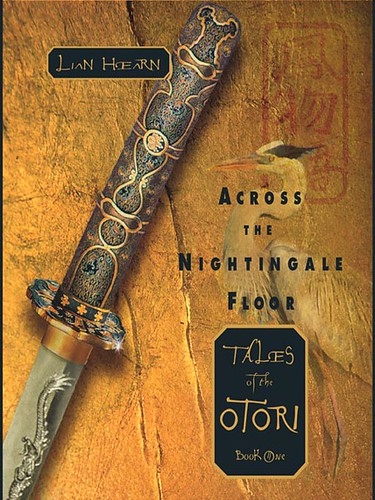
Lian Hearn - Tales of the Otori (1-3 book)


Lian Hearn - Tales of the Otori (1-3 Books)


Across the Nightingale Floor (Book 1)
Publisher: Riverhead Trade | ISBN: 1573223328 | edition 2003 | Genre: Epic Fantasy | LIT | 336 pages | 285 Kb


Grass for His Pillow (Book 2)
Publisher: Riverhead Trade | ISBN: 1594480036 | edition 2004 | Genre: Epic Fantasy | PDF | 156 pages | 421 Kb


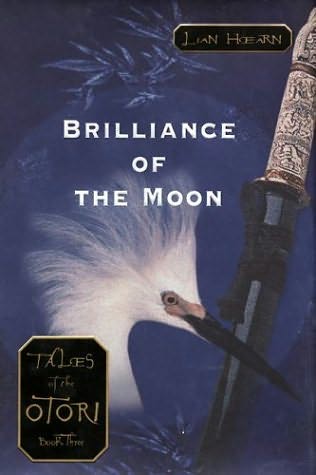
Brilliance of the Moon (Book 3)
Publisher: Riverhead Hardcover | ISBN: 1573222704 | edition 2004 | Genre: Epic Fantasy | epub | 162 pages | 462 KB


It's over seven years since the publication of the first book Across the Nightingale Floor (2002) named a New York Times Notable Book of the Year, one of Book magazine's best novels of the year. Since then the Tales of the Otori have been sold into 36 countries and have been world wide best sellers.

The Tales of the Otori trilogy tells the epic story of Otori Takeo and Shirakawa Kaede, the young lovers whose fate is played out in a mythical, feudal, Japanese land, a world both beautiful and cruel, in the midst of an enormous power struggle against a background of warring clans, secret alliances, high honour and lightning swordplay. This journey of fascinating adventure, treachery and passion - whose appeal crosses genres, genders and generations establishes Tales of the Otori as one of the most brilliant and enduring works of modern fiction.


Download
Book 1
Book 2
Book 3


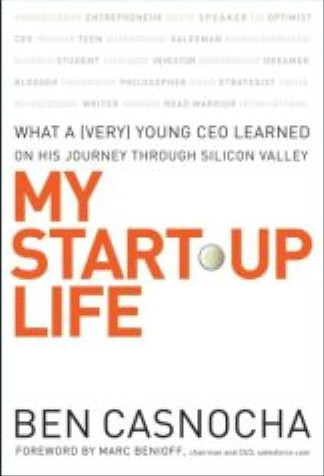
Ben Casnocha - My Start-Up Life:What a (Very) Young CEO Learned on His Journey Through Silicon Valley


Ben Casnocha - My Start-Up Life:What a (Very) Young CEO Learned on His Journey Through Silicon Valley
Jossey Bass | edition 8 Jun 2007 | ISBN: 0787996130 | 208 pages | PDF | 5,31 Mb

Ben Casnocha discovered he was entrepreneur at age 12 and hasn′t slowed down since. In this remarkably instructive book, Ben dissects the entrepreneurship "gene," explaining that everyone has inherited it if they have an idea to make the world a better place. In Casnocha′s case, he found a better way for city governments to communicate with constituents on the Web. Six years later, Comcate has dozens of municipal clients, a growing staff, and a record of excellence. This book is the story of his start–up, but also a conversation with his mentors, clients and fellow entrepreneurs about how to make a business idea work and how to have the time of your life trying. From Pat Lencioni to Marc Benioff of salesforce.com, Ben has won over the best and brightest of the business world now it′s your turn!

LORD, I loved being 19. If I had the chance to do it all again, I’d start up my life at that age. For most relatively “normal” guys like me, life at 19 is a joyously ephemeral state of being in between. Your adolescence is not quite behind you; your adulthood is not quite at hand. You can appropriate the privileges of a grownup without facing the responsibilities. And if you’re lucky, you can still put it all on your parents’ tab.

Or you can be Ben Casnocha, the 19–year–old author of “My Start–Up Life: What a (Very) Young C.E.O. Learned on His Journey Through Silicon Valley.” Publishing a book in his teens actually ranks as one of his more modest accomplishments. At 12, he started his first company. At 14, he founded a software company called Comcate Inc. At 17, Inc. magazine named him “entrepreneur of the year.”

Along the way, Ben (I refuse to address him as Mr. Casnocha until he turns 21) was also captain of his high school basketball team and edited the school newspaper. He will be enrolling in Claremont McKenna College this fall.

In the meantime, he’s been taking what he describes as a “year off” to travel the world and to lecture at universities while continuing to serve as chairman of Comcate. So much for being a normal, carefree 19–year–old.

“I don’t want to be normal,” Ben declares in “My Start–Up Life.” “I want to be something else.”

Ben’s book proves that he is indeed something else, and then some. Like its author, “My Start–Up Life” is precocious, informative and entertaining, if not quite fully realized as a grown–up work. But it’s still very much worth reading to gain insight into the mind, manners and ambitions of an American entrepreneur from whom we will almost undoubtedly be hearing again throughout the first half of this century.

Ben organizes his story in chronological order. He recounts the otherwise “routine day” in 2000 when the teachers of his sixth–grade technology class in a San Francisco–area middle school proposed the idea of creating a Web site dedicated to resolving citizen complaints about local government. Unlike his classmates, who abandoned the project as soon as school let out, he spent the summer learning how to write the HTML code necessary to make ComplainandResolve.com a short–lived but functioning entity.

In 2002, Ben transformed that not–for–profit classroom venture into Comcate, a classic Silicon Valley start–up that provides software to enable city managers to track and resolve citizen complaints. He describes days when playing hooky from school started with catching a flight to Los Angeles and ended with basketball practice back in San Francisco. In between, there were sales calls to potential clients, lunches with venture capitalists, and scores of e–mail messages to and from a software programmer in India.

But “My Start–Up Life” is more of an entrepreneurial how–to manual than the autobiography of a whiz kid. The narrative chapters are interspersed with sidebars headlined “Brain Trust” and “Brainstorm” that provide insights from adult business people and share the author’s epiphanies on everything from “redefining the entrepreneurial lifestyle” with proper sleep, nutrition and exercise, to ways to “maximize luck.”

“Expose yourself to as much randomness as possible,” Ben advises. “Attend conferences no one else is attending. Read books no one else is reading. Talk to people no one else is talking to. Who would have thought that giving a speech at a funeral at age 12 would introduce me to a man who would introduce me to my first business contact who would introduce me to several other important people in my life. That’s luck. That’s randomness.”

An appendix offers a “One–a–Day, One–Month Plan to Becoming a Better Entrepreneur.” If some of the daily agenda items are mundane (“Stop watching TV,” “Form an advisory board”), others are both insightful and inspirational.

“Act on incomplete information,” he urges in the context of entrepreneurial risk–taking. He says Gen. Colin Powell “expected his commanders in the field to make decisions when they had 40 percent of the potentially available information. In life–or–death situations. And you think you need more information?”

Unfortunately, “My Start–Up Life” fails to give a coherent account of Comcate’s financing and the current status of the company, which is privately held. In a recent telephone interview, Ben said he withheld those kinds of details for proprietary reasons because his company is a developing enterprise.

With a little prodding, he told me that he raised “about $250,000” to start Comcate, and that the company is now “self–sustaining” with 6 employees, 75 local government clients and anticipated 2007 revenue of $1 million. I just wish he’d put some of this general information in the book.

Apart from its repeated references to the dot–com mania of Silicon Valley, the book lacks political and socioeconomic context. In describing the early days of Comcate, for example, Ben notes that the fall of 2001 was a “busy few months,” without any mention of the terrorist attacks of Sept. 11. When I asked him about that, he said that “it didn’t really impact the business.”

I also would have liked to read more about Ben’s parents. He duly expresses his gratitude, especially to his father who lent space in his law office for Comcate. But we never get a clear picture of what life was like in the Casnocha household. Talk about risk–taking — nothing takes more wisdom and courage than their kind of entrepreneurial parenting.

In any event, Ben seems to be gaining an ever more acute sense of history and his own mortality as “My Start–Up Life” hits the stores. He told me that he’s already working on a second book, about “America as the world’s greatest start–up.”

He added that he intends to make the most of the time left until his next birthday, in March 2008. “I’ve got another eight months until I’m just another boring 20–year–old,” he said. (New York Times, June 17, 2007)


Saturday, June 6, 2009

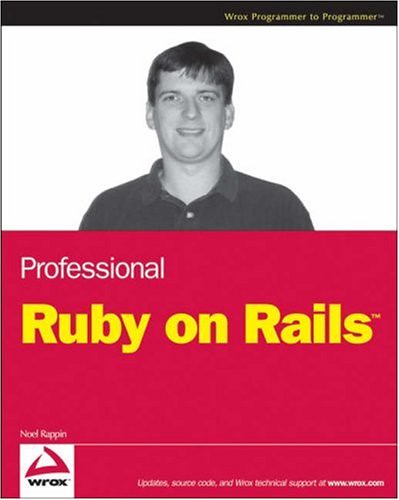
Noel Rappin - Professional Ruby on Rails


Noel Rappin - Professional Ruby on Rails
Wrox | 2008-02-25 | ISBN: 047022388X | 483 pages | PDF | 4,39 Mb

This book bridges the gap between what you'll learn from a typical beginner book about Ruby on Rails and what you'll need to know to create a solid, professional, spectacular, complex web application. Professional Ruby on Rails is a guide to taking a beginner web site and making it great. The book covers topics of interest to a web professional who is trying to develop and deploy a complex application. These topics include:
- Using REST to structure your application cleanly
- How to test and deploy your application for maximum automation with minimal headache
- Protecting your site and your user's data
- Using Rails to create the kinds of interactions that web users are coming to expect

The current Rails books are either beginner books, cookbook-style books, or specifically aimed at Ajax development. This book will fill the void for a book that discusses in-depth the information that a developer would need in order to move from a basic site to a fully featured web application.

Contents

Chapter 1: Building Resources

Chapter 2: Rails Source Control with Subversion

Chapter 3: Adding Users

Chapter 4: Build Tools and Automation

Chapter 5: Navigation and Social Networking

Chapter 6: The Care and Feeding of Databases

Chapter 7: Testing Tools

Chapter 8: Rails - Driven JavaScript

Chapter 9: Talking to the Web

Chapter 10: Internationalizing Your Application

Chapter 11: The Graphic Arts

Chapter 12: Deploying Your Application

Chapter 13: Performance

Chapter 14: Going Meta

Chapter 15: Extending Rails with Plugins

Chapter 16: Replacing Ruby Tools

Appendix A: Things You Should Download

Appendix B: Web Frameworks Inspired by Rails

Index

Download