Saturday, June 6, 2009

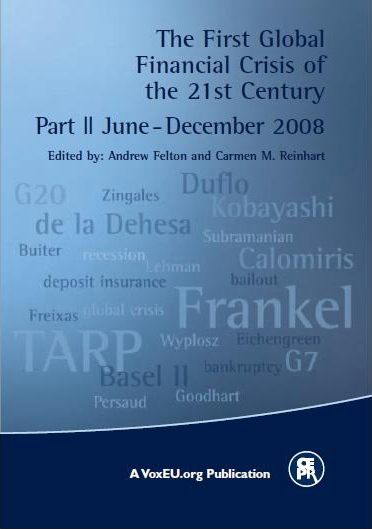
The First Global Financial Crisis of the 21st Century 2 vol.


CEPR - The First Global Financial Crisis of the 21st Century
Publisher: CEPR | ISBN: 978-0-9557009-3-4 | edition June 2008 | PDF | 204 pages | 1,12 mb

CEPR - The First Global Financial Crisis of the 21st Century. Vol.2 June – December, 2008
Publisher: CEPR | ISBN: 978-0-9557009-9-6 | edition January 2009 | PDF | 390 pages | 2,16 mb

The Centre for Economic Policy Research (CEPR), a registered charity founded in 1983 by Richard Portes, FBA, CBE, is a network of over 700 researchers based mainly in universities throughout Europe, who collaborate through the centre in research and its dissemination. CEPR's office is located in London but CEPR is a Think-Net drawing on academic research across Europe.

The Centre's mission is to promote research excellence and policy relevance in European economics. CEPR network of over 700 Research Fellows and Affiliates are based in over 237 different institutions in 28 countries (90% in the European Union. Because it draws on such a large network of researchers, CEPR is able to produce a wide range of research that reflects a broad spectrum of individual viewpoints and perspectives.


Vol.1 Contents

Preface
Introduction

Section 1 Why Did the Crisis Happen?

The relationship between the recent boom and the current delinquencies in subprime mortgages
Giovanni Dell'Ariccia, Deniz Igan and Luc Laeven

Why bank risk models failed
Avinash Persaud

Blame the models
Jon Danielsson

The subprime crisis: observations on the emerging debate
Charles Wyplosz

The subprime series, part 1: Financial crises are not going away
Stephen G. Cecchetti

The subprime series, part 2: Deposit insurance and the lender of last resort
Stephen G. Cecchetti

The subprime series, part 3: Why central banks should be financial supervisors
Stephen G. Cecchetti

The subprime series, part 4: Does well-designed monetary policy encourage risk- taking?
Stephen G. Cecchetti

The subprime crisis: Greenspan’s Legacy
Tito Boeri and Luigi Guiso

The impact of short-term interest rates on risk-taking: hard evidence
Vasso Ioannidou, Steven Ongena and Jose Luis Peydró

Why did bank supervision fail?
Guido Tabellini

The subprime crisis and credit risk transfer: something amiss
Luigi Spaventa

The crisis of 2007: some lessons from history
Michael D. Bordo

Reflections on the international dimensions and policy lessons of the US subprime crisis
Carmen Reinhart

Section 2 How Is the Crisis Unfolding?

Federal Reserve policy actions in August 2007: frequently asked questions (updated)
Stephen G. Cecchetti

An extensive but benign crisis?
Tommaso Monacelli

Not (yet) a ‘Minsky moment’
Charles W. Calomiris

A B & B future for subprime borrowers?
Willem Buiter

Double counting 101: the useful distinction between inside and outside assets
Willem Buiter

Bagehot, central banking and the financial crisis
Xavier Vives

The financial crisis: why it may last
Angel Ubide

Fallout from the credit crunch
Dennis J. Snower

Four mega-dangers international financial markets face
Dennis J. Snower

Federal Reserve policy responses to the crisis of 2007–8: a summary
Stephen G. Cecchetti

While the ECB ponders, the Fed moves – and cleverly at that
Charles Wyplosz

Section 3 What Can Be Done?

The subprime crisis: Who pays and what needs fixing
Marco Onado

Filling the information gap
Alberto Giovannini and Luigi Spaventa

Lessons from the North Atlantic financial crisis
Willem Buiter

Lessons from Northern Rock: banking and shadow banking
Willem Buiter

Lessons from Northern Rock: how to handle failure
Willem Buiter

Ratings agency reform
Richard Portes

How to avoid further credit and liquidity confidence crises
Guillermo de la Dehesa

The inappropriateness of financial regulation
Avinash Persaud

There is more to central banking than inflation targeting
Paul De Grauwe

Can monetary policy really be used to stabilize asset prices?
Katrin Assenmacher-Wesche and Stefan Gerlach

A missed opportunity for the Fed
Willem Buiter and Anne Sibert

The central bank as the market-maker of last resort: from lender of last resort to market-maker of last resort
Willem Buiter and Anne Sibert

Avoiding disorderly deleveraging
Luigi Spaventa

Chronology
Glossary


Vol.2 Contents

Preface
Introduction

Section 1: The spread of the crisis to the rest of the world

The first casualty of the crisis: Iceland
Jon Danielsson

Iceland: The future is in the EU
Philip Lane

Iceland faces the music
Gylfi Zoega

The collapse of Iceland’s banks: the predictable end of a non-viable business model
Willem Buiter and Anne Sibert:

The fallout from the global credit crisis: Contagion - emerging markets under stress
Helmut Reisen

From capital flow bonanza to financial crash
Carmen Reinhart and Vincent Reinhart

Rapid and large liquidity funding for emerging markets
Guilermo Calvo and Ruby Loo-Kung

Stock market wealth effects in emerging market countries
Heiko Hesse

The political economy of debt relief
Andreas Freytag and Gernot Pehnelt

India’s credit crunch conundrum
Arvind Subramanian

Preserving financial sector confidence, not monetary easing, is key
Arvind Subramanian

The folly of the central banks of Europe
Jonh Muellbauer

Crisis management tools for the euro-area
Daniel Gros and Stefano Micossi

A proposal on financial regulation in Europe for the next European Council
Carmine Di Noia

The European response to the crisis: Not quite there yet
Marco Pagano

Finance, market, globalisation: a plot against mankind?
Salvatore Rossi

Can Europe take care of its own financial crisis?
Daniel Gros

The financial crisis may hasten European integration but slow global banking
Avinash Persaud

A call for a European Financial Stability Fund
Daniel Gros and Stefano Micossi

Governance of banks
Luc Laeven and Ross Levine

Finance, redistribution, globalisation
Giuseppe Bertola and Anna Lo Prete

What Next for the Dollar? The Role of Foreigners
Kristin Forbes

Is the US too big to fail?
Carmen Reinhart and Vincent Reinhart

Can the IMF save the world?
Barry Eichengreen

Section 2: What is wrong with the traditional economic/financial viewpoint and models?

The financial meltdown is an academic crisis too
Richard Dale

European securitisation and the possible revival of financial innovation
John Kiff, Paul Mills, and Carolyne Spackman

The price of transparency
Marco Pagano

The Panglossian World of Finance
Daniel Cohen

What can be learned from the banking crisis
Hans-Werner Sinn

Do reputational concerns lead to reliable ratings?
Beatriz Mariano

The Financial Economists Roundtable’s statement on reforming the role of SROs in the securitisation process
Charles Goodhart

Liquidity risk and the current crisis
Lasse Heje Pedersen

How risk sensitivity led to the greatest financial crisis of modern times
Avinash Persaud

Transmission of liquidity shocks: Evidence from the 2007 subprime crisis
Nathaniel Frank, Brenda González-Hermosillo, and Heiko Hesse

The lender of last resort of the 21st century
Xavier Freixas and Bruno Parigi

Reason with the messenger; don’t shoot him: value accounting, risk management and financial system resilience
Avinash Persaud

Escaping from a Combined Liquidity Trap and Credit Crunch
Frank Heinemann

Complexity kills
Jon Danielsson

Will the credit crunch lead to recession?
Nicholas Bloom

The credit crunch may cause another great depression
Nicholas Bloom

The procyclical effects of Basel II
Rafael Repullo and Javier Suarez

Central banks’ function to maintain financial stability: An uncompleted task
Charles Goodhart

Let banks be banks, let investors be investors
Alberto Giovannini

Stormy Weather in the Credit Default Swap Market
Virginie Coutert and Mathieu Gex

Why does the spread between LIBOR and expected future policy rates persist, and should central banks do something about it?
Francesco Giavazzi

Section 3: The proper governmental response

Anatomy of the financial crisis
Barry Eichengreen

The subprime turmoil: What’s old, what’s new, and what’s next
Charles Calomiris

An international perspective on the US bailout
Romain Rancière

Not the end of capitalism
Erik Berglöf and Howard Rosenthal

The effectiveness of fiscal policy depends on the financing and monetary policy mix
Giancarlo Corsetti and Gernot Müller

Fiscal policy and the credit crunch: What will work?
Daniel Gros

Episode V: Expectations strike back
Micael Castanheira

Germany needs high wage settlements and a serious fiscal stimulus
Andrea Boltho and Wendy Carlin

Plan B
Luigi Zingales

Why Paulson is (maybe) right
Charles Wyplosz

A (mild) defence of TARP
Luigi Spaventa

The right alternative to Paulson's plan
Avinash Persaud

The Paulson Plan: A useful first step but nowhere near enough
Willem Buiter

From recapitalisation to restructuring and reforms
Viral Acharya

Why Paulson is wrong
Luigi Zingales

A matched preferred stock plan for government assistance
Charles Calomiris

An emerging consensus against the Paulson Plan: Government should force bank capital up, not just socialise the bad loans
Jeffrey Frankel

Banks’ losses and capital: The new version of the paradox of Achilles and the tortoise
Marco Onado

TARP2: A totally alternative relief programme
Ricardo Cesari

Involving European citizens in the benefits of the rescue plan: The political paradoxes of bank socialism
Tito Boeri

What is a reverse auction?
Marco Pagano

‘No recourse’ and ‘put options’: Estimating the ‘fair value’ of US mortgage assets
Daniel Gros

Bringing money markets back to life
Javier Suarez

The other part of the bailout: Pricing and evaluating the US and UK loan guarantees
Viral Acharya and Raghu Sundaram

The beginning of the end game…
Daniel Gros and Stefano Micossi

Financial crisis resolution: It’s all about burden-sharing
Charles Wyplosz

Is the euro area facing a credit crunch or a credit squeeze?
Guillermo de la Dehesa

Global financial crisis: How long? How deep?
Stijn Claessens, M Ayhan Kose and Marco Terrones

The cost of resolving financial crises
Luc Laeven

Financial crisis management: Lessons from Japan’s failure
Keiichiro Kobayashi

And now the Great Depression
Barry Eichengreen

Financial markets and a lender of last resort
Eric Hughson and Marc Weidenmier

Too many bankers?
Esther Duflo

Chronology
Glossary

Download
Vol.1
Vol.2


Thursday, June 4, 2009

J. K. Rowling - Quidditch Through the Ages


J. K. Rowling - Quidditch Through the Ages
Publisher: Bloomsbury Publishing | ISBN: 0747554714 | edition 2001 | PDF | 42 pages | 3,2 mb

Quidditch Through the Ages is both a fictional book described in the Harry Potter series of novels by the British author J. K. Rowling, and a real book by that author, although her name is only stated in the book as the copyright holder of the "Harry Potter"-name. The real book purports to be a reproduction of a copy of the fictional book held in the Hogwarts library, written by Kennilworthy Whisp.

Within the fictional world of Harry Potter, Quidditch Through the Ages is written by Kennilworthy Whisp, a renowned Quidditch expert.

The book traces the history of Quidditch, as well as the earliest broom-based games. According to Madam Pince, the copy in the Hogwarts library is "pawed about, dribbled on, and generally maltreated" nearly every day, which Albus Dumbledore says is high praise for any book. Harry Potter enjoyed this book. When Severus Snape caught Harry outside the school with this book in Harry Potter and the Philosopher's Stone, he invented the rule that no library books were allowed outside the school, and took it.

Although the book predates Harry Potter and the Philosopher's Stone, which takes place in 1991, the book contains numerous anachronisms such as comments on the outcome of many matches played, and in particular, an interesting game in 1994.

In the Harry Potter universe, Kennilworthy Whisp is a Quidditch expert and fanatic who has written many books about the sport, including Wigtown Wanderers, He Flew Like a Madman, Beating the Bludgers - A Study of Defensive Strategies in Quidditch, and Quidditch Through the Ages. He lives in Nottinghamshire, where he divides his time with "wherever the Wigtown Wanderers are playing this week." His hobbies include backgammon, vegetarian cookery, and collecting vintage broomsticks as well.

In 2001 Rowling penned two companion books to the Harry Potter series, Quidditch Through the Ages and Fantastic Beasts and Where to Find Them, for British charity and off-shoot of Live Aid, Comic Relief[2] with all of her royalties going to the charity. As of July 2008, the books combined are estimated to have earned over $30 million for Comic Relief.[3] The two books have since been made available in hardcover.


J. K. Rowling - Fantastic Beasts and Where to Find Them


J. K. Rowling - Fantastic Beasts and Where to Find Them
Publisher: Topeka Bindery | ISBN: 0613325419 | edition 2001 | PDF | 152 pages | 3,2 mb

Fantastic Beasts and Where to Find Them is a 2001 book written by English author J. K. Rowling to benefit the charity Comic Relief. Over 80% of the cover price of each book sold goes directly to poor children in various places around the world. According to Comic Relief, sales from this book and its companion Quidditch Through the Ages have raised £15.7 million. In a 2001 interview with publisher Scholastic, Rowling stated that she chose the subject of magical creatures because it was a fun topic for which she had already developed a lot of information. Rowling's name does not appear on the cover of the book, the work being credited under the pseudonym "Newt Scamander".

Fantastic Beasts purports to be a reproduction copy of a textbook owned by Harry Potter and written by magizoologist Newt Scamander, a fictional character in the Harry Potter series of novels. In the series, Magizoology is the study of magical creatures.

Albus Dumbledore, headmaster of Hogwarts, provides the Foreword and explains to the reader the purpose of the special edition of this book (the Comic Relief charity). At the end, he tells us Muggles that "...the amusing creatures described hereafter are fictional and cannot hurt you." To his Wizarding community, he says, "Draco dormiens nunquam titillandus", which is the Hogwarts motto. The phrase is Latin for "Never Tickle A Sleeping Dragon".

Fantastic Beasts and Where to Find Them contains the history of Magizoology and describes 75 magical species found around the world. Scamander collected most of the information found in the book through observations made over years of travel and across five continents. The fictional author notes that the first edition was commissioned in 1918 by Mr Augustus Worme of Obscurus Books. However, it was not published until 1927. It is now in its fifty-second edition.

The book is a required textbook for first-year Hogwarts students, having been an approved textbook since its first publication. It is not clear why students need it in their first year, as students do not take Care of Magical Creatures until their third year. However, it may be used as an encyclopaedia of Dark creatures studied in Defence Against the Dark Arts classes. In his foreword to the book, Albus Dumbledore notes that it serves as an excellent reference for Wizarding households in addition to its use at Hogwarts.

A highlight of the book is the numerous doodles and comments in it by Harry and Ron (and one by Hermione). Based on some of their comments, they were written around the time of the fourth book. These doodles add some extra information for fans of the series, for example the "Acromantula" entry has a comment confirming Hogwarts is located in Scotland.

Integrated in the design, the cover of the book appears to have been clawed by some sort of animal.


Wednesday, June 3, 2009

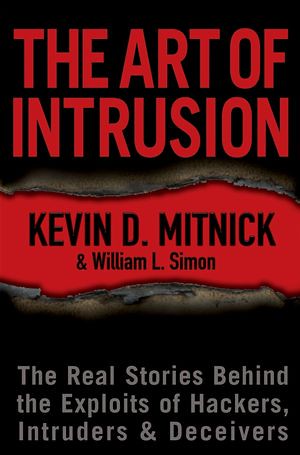
Kevin D. Mitnick - The Art of Intrusion: The Real Stories Behind the Exploits of Hackers, Intruders and Deceivers


Kevin D. Mitnick - The Art of Intrusion: The Real Stories Behind the Exploits of Hackers, Intruders and Deceivers
Publisher: Wiley 2005 | ISBN: 0764569597 | PDF | 291 pages | 3,06 mb

It would be difficult to find an author with more credibility than Mitnick to write about the art of hacking. In 1995, he was arrested for illegal computer snooping, convicted and held without bail for two years before being released in 2002. He clearly inspires unusual fear in the authorities and unusual dedication in the legions of computer security dabblers, legal and otherwise. Renowned for his use of "social engineering," the art of tricking people into revealing secure information such as passwords, Mitnick (The Art of Deception) introduces readers to a fascinating array of pseudonymous hackers. One group of friends bilks Las Vegas casinos out of more than a million dollars by mastering the patterns inherent in slot machines; another fellow, less fortunate, gets mixed up with a presumed al-Qaeda–style terrorist; and a prison convict leverages his computer skills to communicate with the outside world, unbeknownst to his keepers. Mitnick's handling of these engrossing tales is exemplary, for which credit presumably goes to his coauthor, writing pro Simon. Given the complexity (some would say obscurity) of the material, the authors avoid the pitfall of drowning readers in minutiae. Uniformly readable, the stories—some are quite exciting—will impart familiar lessons to security pros while introducing lay readers to an enthralling field of inquiry. Agent, David Fugate. (Mar.) (Publishers Weekly, February 14, 2005)

Infamous criminal hacker turned computer security consultant Mitnick offers an expert sequel to his best-selling The Art of Deception, this time supplying real-life rather than fictionalized stories of contemporary hackers sneaking into corporate servers worldwide. Each chapter begins with a computer crime story that reads like a suspense novel; it is a little unnerving to learn how one's bank account is vulnerable to digital thieves or how hackers with an interest in gambling can rake in thousands of dollars in just minutes at a compromised slot machine. The hack revealed, Mitnick then walks readers step by step through a prevention method. Much like Deception, this book illustrates that hacking techniques can penetrate corporate and government systems protected by state-of-the-art security.
Mitnick's engaging writing style combines intrigue, entertainment, and education. As with Deception, information technology professionals can learn how to detect and prevent security breaches, while informed readers can sit back and enjoy the stories of cybercrime. Recommended for most public and academic libraries.--Joe Accardi, William Rainey Harper Coll. Lib., Palatine, IL (Library Journal, January 15, 2005)


Cory Doctorow - Content: Selected Essays on Technology, Creativity, Copyright, and the Future of the Future


Cory Doctorow - Content: Selected Essays on Technology, Creativity, Copyright, and the Future of the Future
Publisher: Tachyon Publications 2008 | ISBN: 1892391813 | PDF | 224 pages | 4,01 mb


Doctorow here proves he’s smart, funny, and good at accessibly boiling down issues he’s passionate about. On topics ranging from fanfic (readers’ additions to their favorite authors’ creations, usually online) to the terrible business model Microsoft presents by treating customers like potential thieves from the beginning, Doctorow moves to the forefront of conversations likely to determine how creators and audiences are able to use new technologies. He compares Internet content-management problems to similar technological snafus—such as the transition from live performance to radio, and from manuscript to printed books—and how the established order of the day reacted, demonstrating his grasp of the ways in which history repeats itself and how we can use the lessons of history to cope with further changes in the exchange of information. Doctorow excels in writing short forms, the essay no less than the short story, making this collection a pleasure to read, not to mention thought-provoking. --Regina Schroeder


Contents

1. Microsoft Research DRM Talk

2. The DRM Sausage Factory

3. Happy Meal Toys versus Copyright: How America Chose Hollywood and Wal-Mart, and Why It’s Doomed Us, and How We Might Survive Anyway

4. Why Is Hollywood Making a Sequel to the Napster Wars?

5. You DO Like Reading Off a Computer Screen

6. How Do You Protect Artists?

7. It’s the Information Economy, Stupid

8. Downloads Give Amazon Jungle Fever

9. What’s the Most Important Right Creators Have?

10. Giving it Away

11. Science Fiction is the Only Literature People Care Enough About to Steal on the Internet

12. How Copyright Broke

13. In Praise of Fanfic

14. Metacrap: Putting the Torch to Seven Straw-Men of the Meta-Utopia

15. Amish for QWERTY

16. Ebooks: Neither E, Nor Books

17. Free(konomic) Ebooks

18. The Progressive Apocalypse and Other Futurismic Delights

19. When the Singularity is More Than a Literary Device: An Interview with Futurist-Inventor Ray Kurzweil

20. Wikipedia: A Genuine HG2G — Minus the Editors

21. Warhol Is Turning in His Grave

22. The Future of Ignoring Things

23. Facebook’s Faceplant

24. The Future of Internet Immune Systems

25. All Complex Ecosystems Have Parasites

26. READ CAREFULLY

27. World of Democracycraft

28. Snitchtown

29. About the author